Blue Ridge Parkway

Blue Ridge Parkway

Blue Ridge Parkway is a road trip that you won’t get bored on.

  • Blue Ridge Parkway is a road and long park, situated in the Blue Ridge Mountains area, in North Carolina and Virginia, in the United States.
  • Blue Ridge Parkway is 755 kilometres (469 miles) long, and as a result, is the lengthiest linear park in the United States.
  • Blue Ridge Parkway is a protected area governed by the United States National Park Service, and out of the all the areas owned by the National Park Service, it is the most visited.
  • Twenty six tunnels and 168 bridges can be found along Blue Ridge Parkway; and some sections of the road can be closed due to dangerous weather conditions or repairs.
  • The building process for Blue Ridge Parkway began in late 1935, and it was constructed by various companies, and while it was almost finished in 1965, it took until 1987 for it to be complete, due to protests from the owner of Grandfather Mountain, who wanted to protect it.
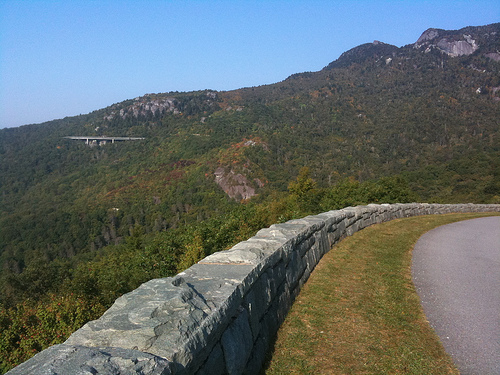
Blue Ridge Parkway, Scene, Road, Bridge, Side, Ten Random Facts, America, Pass, Mountains, Beauty
Part of Blue Ridge Parkway
Image courtesy of G N Basset/Flickr
  • Much vegetation can be found around Blue Ridge Parkway, including, but not limited to, wildflowers, trees, annual and perennial plants, and bushes, such as rhododendrons and daisies.
  • Blue Ridge Parkway has turn-offs that connect with other roads and highways, although it is not necessary to stop for traffic along the way.
  • Speeds are limited to a maximum of 72 kilometres per hour (45 miles per hour) on Blue Ridge Parkway.
  • Blue Ridge Parkway is popular with visitors due to its scenery, and during 2013, it was visited by a count of almost 13 million people.
  • Blue Ridge Parkway is the home to numerous species of fauna, including 225 bird species, 60 species of mammals, 99 fish species and 31 species of reptiles.
Bibliography:
Blue Ridge Parkway, 2014, Wikipedia, http://en.wikipedia.org/wiki/Blue_Ridge_Parkway
Nature & Science, 2014, National Park Service, http://www.nps.gov/blri/naturescience/index.htm

Amazon:     

Gharial

Gharial

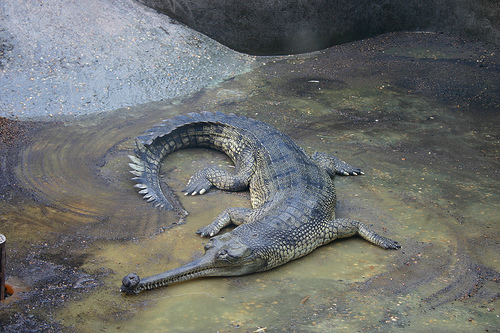
One of the most unique creatures is the gharial, but is highly endangered.

  • Gharials are critically endangered, crocodile-related reptiles, found around India’s sandy banked rivers.
  • ‘Gharials’ are also known as ‘gavials’, ‘long-nosed crocodiles,’ ‘fish-eating crocodiles’ and ‘nakas,’ among others.
  • Gharials have the scientific name Gavialis gangeticus, and are said to be the only living species from the family Gavialidae, a family of reptiles.
  • A gharial can range from 3.5 metres (11 feet) in length, to the longest found – 6.25 metres (20.5 feet), and they can weigh between 150 to 977 kilograms (330 to 2154 pounds).
  • Gharials have a long snout and mouth, filled with up to 110 teeth, and they have scales that are typically black, grey, brown or olive in colour.
Gharial, Crocodile, Gavial, Ten Random Facts, Animal, Reptile, Endanged, Zoo
Gharial
Image courtesy of Ryan Somma/Flickr
  • The habitat of a gharial typically consists of deep, sandy rivers, and the reptile generally spends the majority of its time in water.
  • The diet of gharials mainly consists of fish, but also other aquatic animals, and they are not usually highly dangerous to humans, as they are not built for eating large prey.
  • During March and April, an adult female gharial typically makes a nest, a hole in the riverbank, and lays an average of 30 to 50 eggs in the hole.
  • Gharials are critically endangered due to pollution, over fishing and habitat removal; and populations have decreased by around 96% in less than a century, to a maximum total of 235 animals, in 2006.
  • As part of a conservation program, some zoos breed gharials and release them into the wild, and the animals have an average lifespan of 20 to 30 years.
Bibliography:
Gharial, 2013, A-Z Animals, http://a-z-animals.com/animals/gharial/
Gharial, 2014, Wikipedia, http://en.wikipedia.org/wiki/Gharial

Amazon:      

Bacon

Bacon

Do you like the smell of bacon frying?

  • Bacon is a type of meat derived from pigs, usually preserved using salt in a process of curing.
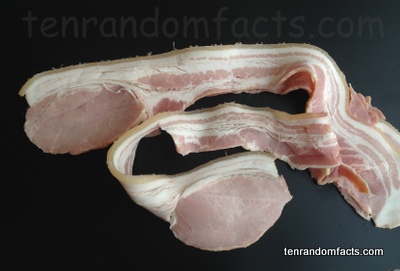
  • Bacon is generally cut from the side, back or the belly of pork, and is sold as pieces, strips, or ‘rashers’ as they are known, as well as cubes.
  • Bacon is typically made by curing the pork with salt and generally then left to sit, and is often boiled, smoked and or dried before commercially packing.
  • Bacon is popularly eaten for breakfast, accompanying eggs, but it has more recently been served coated in chocolate, put in sandwiches or deep fried in a batter.
  • The popularity of bacon has recently increased in the United States, with sales in 2013 increasing by 9.5%.

Bacon, Uncooked, Raw, Pink, White, Light, Food, Culinary, Ten Random Facts, Delicious

  • Bacon has fat that becomes runny when hot, which usually solidifies when cool, and it makes lard or grease that meat and other foods can be cooked in.
  • Bacon was originally produced on farms or in homes, with various recipes and methods, although they mostly used a dry curing process, until the introduction of mass production during the Industrial Revolution, and the modern processing methods that followed.
  • Other meats can be prepared in a similar way to bacon, such as turkey meat, and vegetarian versions are also available.
  • Bacon is generally required to be cooked before consumption, and it is typically pink and white when raw, and it usually darkens when cooked.
  • Bacon is high in protein, sodium, niacin, selenium, saturated fat and phosphorus, and due to the high salt content, when large quantities are eaten over periods of time, cardiovascular problems can occur.


Bibliography:
Bacon, 2014, Wikipedia, http://en.wikipedia.org/wiki/Bacon
History of Bacon, 2014, The English Breakfast Society, http://englishbreakfastsociety.com/history-of-bacon.html

Amazon:  

Wallet

Wallet

Do you look fashionable with a wallet?

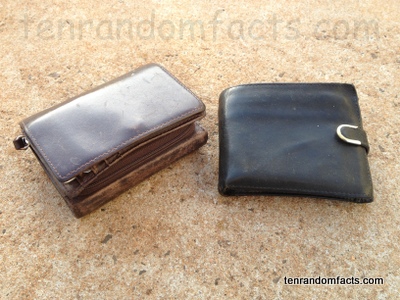
  • Wallets are items used primarily to hold items including, but not limited to, money, identification cards, credit cards, personal items and other types of cards.
  • A ‘wallet’ is also known as a ‘notecase’ or a ‘billfold’, and it is also sometimes called a ‘purse’, although not all purses are described or classified as such.
  • Wallets are typically small enough to fit in one’s pocket, but they do vary in size, and can often be folded.
  • The term ‘wallet’ was first used in the 1300s, used to describe knapsacks and bags that often stored food, although the modern use of the term did not originate until the 1800s.
  • Wallets are most often black or brown in colour, but vary, often depending on the gender targeted, and the materials used, and they can be decorated with images and patterns.

Wallet, Leather, Black, Brown, Male, Female, Ten Random Facts, Money, Fashion, Invention

  • Leather or other textile fabrics are the most commonly used material in wallets, although metal or other materials can be used.
  • Wallets often have numerous slots or bands to organise items, and the pockets vary in size by country, due to different money sizes.
  • Wallets can be easy targets for pickpockets, and to prevent this, they can be attached to garments using a strap or chain, or placed in a difficult to access pocket.
  • Some wallets have particular purposes, like those used for travel documents, and some are designed to attach to one’s shoe, wrist or around one’s neck, so that hands can be kept free, especially when exercising.
  • Wallets became particularly modernised and popular by the 1950s, with the introduction of credit cards.
Bibliography:
Brief Overview and History of The Wallet, 2014, Street Directory, http://www.streetdirectory.com/travel_guide/34774/modelling/brief_overview_and_history_of_the_wallet.html
History of Wallets, 2014, Wallets – The largest collection of Wallets for Men and Women, http://www.wallets.org/wallets/the-history-of-wallets/
Wallet, 2014, Wikipedia, http://en.wikipedia.org/wiki/Wallet

Amazon:     

Children’s Stick Insect

Children’s Stick Insect

Children’s Stick Insects are masters of camouflage.

  • A Children’s Stick Insect is a winged insect native to eastern parts of Australia, that are medium in size, compared to other stick insects.
  • Children’s Stick Insects have the scientific name Tropidoderus childrenii and are from the family Phasmatidae, a family of stick insects that can regrow their own limbs.
  • ‘Children’s Stick Insects’ are also known as ‘yellow-winged spectres’ and they have the ability to fly, although females are less likely to do so.
  • Children’s Stick Insects range from 11 to 14 centimetres (4.3 to 5.5 inches) in length, and they have long legs.
  • The diet of a Children’s Stick Insect consists solely of Australian native eucalyptus leaves, and they spend most of their time in trees.

Children's Stick Insect, Green, Camp, Back, Animal, Insect, Ten Random Facts, Australia

  • A Children’s Stick Insect has the ability to release its limbs, allowing it to escape from predators when caught.
  • Children’s Stick Insects range from green, red, brown, cream, pink and purple in colour, depending on the gender and the age of the insect, and wings are typically a faint yellow to green.
  • Camouflage is one of the primary protection techniques used by Children’s Stick Insects, as they often have the appearance of leaves.
  • Children’s Stick Insects lay small ovoid eggs in the trees, that drop down to the ground and are typically grey in colour, and they take approximately four months to hatch.
  • Fellow stick insects occasionally mistake Children’s Stick Insects’ wings for leaves, and as a result eat them, but they are generally not bothered by it, as the wings are insensitive.


Bibliography:
Chapman A, Children’s Stick Insect (Tropidoderus childrenii), n.d, OzAnimals.com, http://www.ozanimals.com/Insect/Children’s-Stick-Insect/Tropidoderus/childrenii.html
Children’s Stick Insect – Tropidoderus childrenii, n.d, Bugs Ed, http://www.bugsed.com/fact_sheets/childrens_stick_insect.html
Tropidoderus childrenii, 2014, Wikipedia, http://en.wikipedia.org/wiki/Tropidoderus_childrenii

Amazon:     

Musha Cay

Musha Cay

Musha Cay is more than just majestic and beautiful.

  • Musha Cay is an island found among the 700 islands and islets of the Bahamas, in the Atlantic Ocean, and is part of the Exuma Chain district.
  • Musha Cay is owned privately by David Copperfield, an illusionist from America, who purchased it and ten other nearby islands for approximately $50 million in 2006.
  • Musha Cay covers an area of 0.6 square kilometres (0.23 square miles) and is one of the 11 islands in what is known as ‘Copperfield Bay’.
  • Musha Cay is a resort, and home to a main manor and a small number of guest villas, that are maintained by around 30 staff.
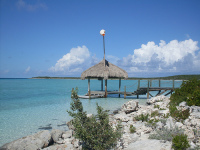
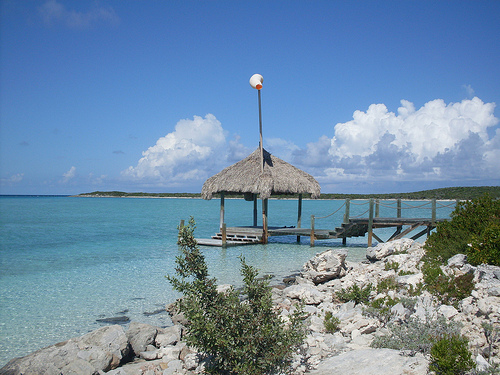
  • Musha Cay has white sand beaches, crystal blue water, and extensive tropical vegetation, and the temperature typically ranges between 21 and 28°C (70 and 82°F).
Musha Cay, Water, Island, Airport, Resort, Ten Random Facts, Place, Atlantic, Resort
Musha Cay
Image courtesy of Daniel Piraino/Flickr
  • People can hire Musha Cay for a vacation or a getaway for their exclusive use, and only one group, of up to 24 people, are permitted to stay on the island at a time.
  • Sergey Brin, the cofounder of Google, was married on the island of Musha Cay in early 2007, and actress Penelope Cruz is also said to have married there in 2010.
  • The are many, typical resort style activities that one can participate in at Musha Cay, including boating, fishing and diving, as well as some that are unique to the island, including a treasure hunt, secret village, olympic style competitions, and goldfish racing.
  • The buildings on Musha Cay were designed by the architect Howard Holtzman, and artifacts from David Copperfield’s International Museum and Library of the Conjuring Arts can also be found there.
  • To stay at Musha Cay, a fee of tens of thousands of dollars is payable per night, making it one of the most expensive islands to holiday at in the world, and while food and many activities are included in the price, massages, international telephone calls, scuba diving, and others, are not.
Bibliography:
About Musha Cay, Private Islands, 2014, Island Hideaway, http://www.islandhideaways.com/private-islands/villas/musha-cay/
Walther G, Musha Cay, David Copperfield’s Magic Private-Island Resort In The Bahamas, 2012, Forbes, http://www.forbes.com/sites/garywalther/2012/11/27/muscha-cay-david-copperfields-magic-island-in-the-bahamas/
Musha Cay, nd, Musha Cay: The Islands of Copperfield Bay, http://www.mushacay.com/

Amazon:     

Related Posts Plugin for WordPress, Blogger...