Great Zimbabwe

Great Zimbabwe

Great Zimbabwe is much more than a crumbling ruin.

  • Great Zimbabwe is the remains of an old, abandoned city, found in Africa’s Zimbabwe, in an elevated part of the country.
  • The actual city of Great Zimbabwe encompasses an area of approximately 0.8 square kilometres (0.3 square miles), while the protected area, as designated by the World Heritage Convention, covers an area of 7.2 square kilometres (2.8 square miles).
  • Communities had been living on the site of Great Zimbabwe since around 300 AD, although it wasn’t until around 1000 AD that the building of the city first commenced.
  • Great Zimbabwe was a once thriving city made of granite stone, that had at least one wall reaching 11 metres (36 feet) in height, and the city is believed to have been built by the native Bantu people.
  • Great Zimbabwe is believed to have been the central point and home to rulers of the area; and the city was in prominent use from around 1000 to 1450 AD.
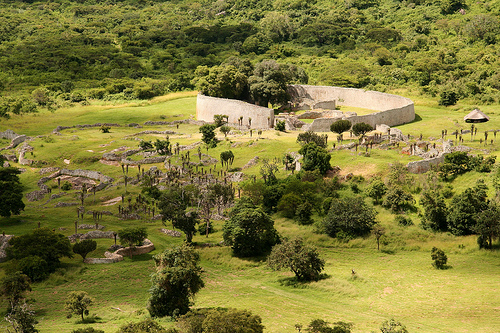
Great Zimbabwe, Stone, High, Aerial, Ten Random Facts, South Africa, Ruins, UNESCO World Heritage Site
Great Zimbabwe
Image courtesy of Erik Torner/Flickr
  • Many objects of archaeological significance have been found on the site of Great Zimbabwe, including soapstone sculptures and figurines, jewellery, money, weaponry and pottery.
  • Great Zimbabwe was originally a prominent centre of trade, with ivory and gold on offer; and the city is believed to have become vacant when a variety of resources became depleted.
  • Portuguese records have shown knowledge of Great Zimbabwe since the 1500s, although it was not until the late 1860s that Europeans found and took interest in the site, and by 1893, the site was designated as a protected area.
  • Great Zimbabwe was declared a UNESCO World Heritage Site in 1986, as the ‘Great Zimbabwe National Monument’ and it is also known as the ‘capital of the Queen of Sheba’, due to speculation of its origin.
  • Great Zimbabwe sits at 1100 metres (3,609 feet) above sea level, and was, and still is a site of spiritual significance for some people.
Bibliography:
Great Zimbabwe, 2014, Wikipedia, http://en.wikipedia.org/wiki/Great_Zimbabwe
Great Zimbabwe National Monument, 2014, UNESCO World Heritage Convention, http://whc.unesco.org/en/list/364

Amazon:     

Pika

Pika

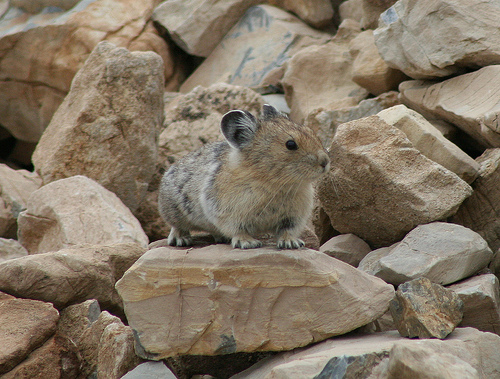
Meet another cute animal, the pika!

  • Pikas are mammals of small size, that originate from North America, Asia and eastern areas of Europe, and inhabit mostly mountainous regions where the temperatures are cooler.
  • ‘Pikas’ are also known as ‘whistling hares’ and ‘picas’, although the latter term is used to refer to a number of other species of animals.
  • Pikas are a family that have the scientific name Ochotonidae, of which there is one genus, Ochotona, and the family is from the order Lagomorpha, the order to which rabbits and hares belong.
  • The length of pikas range from 15 to 23 centimetres (5.9 to 9.1 inches) and they typically range from 75 to 350 grams (2.6 to 12.3 ounces) in weight.
  • The diet of pikas consists of vegetation including grass, shrubs, bushes, leaves, seeds, berries and moss.
Pika, Animal, Mammal, Rocks, Brown, Camouflage, Ten Random Facts, Flickr, American
A Pika
Image courtesy of Glacier NPS/Flickr
  • Pikas generally live by themselves in burrows or crevices found among rocks and soil, and they come out during the day, or dawn and dusk, to gather food.
  • Pikas typically gather vegetation during warmer months and place it in a pile, known as a ‘haypile’, that they often store in their burrow, and they use the dried vegetation as food during the cooler months.
  • A pika has a fur coat that is typically a combination of brown, tan, grey, white and black colours, and the mammal has no tail.
  • A whistling sound can be made by pikas, used when entering a burrow and for communication purposes; and they are preyed on by weasels, dogs, eagles, and foxes.
  • Female pikas give birth to one to five young, a maximum of twice a year, and they have an average lifespan of 3 to 6 years.
Bibliography:
Pika, 2013 A-Z Animals, http://a-z-animals.com/animals/pika/
Pika, 2014, Wikipedia, http://en.wikipedia.org/wiki/Pika

Amazon:     

Christmas Gift

Christmas Gift

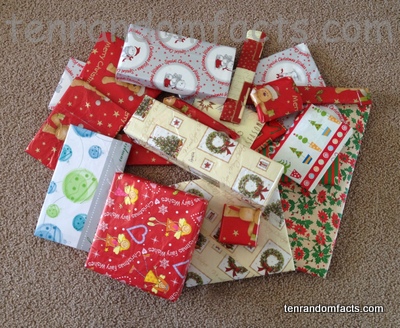
Do you look forwards to Christmas gifts during the Christmas season?

  • Christmas gifts are items given to other people during the Christmas season, and they can be given from a range of people including individuals, families, groups, and businesses.
  • The idea of giving Christmas gifts is often believed to have been inspired by the three gifts that the wise men or magi gave to Jesus after he was born, as well as the suggestion that gifts also symbolise Jesus, God’s gift.
  • The giving of gifts in December was practised by the Ancient Romans during the festival season of Saturnalia, which may have influenced the giving of Christmas gifts at a later time, and in the 1200s French nuns gave gifts to those less fortunate in early December for Saint Nicholas’ Day, and this tradition is still practised in some countries.
  • Christmas gifts only became a common tradition later in the 1700s; and prominent commercial Christmas advertising appeared by the 1820s.
  • Christmas gifts are commonly bought from retailers in October to December, when many shops start advertising their Christmas goods.

Christmas Present, Gift, Ten Random Facts, Invention, Religon, Shapes, Assortment

  • Christmas gifts are commonly given and opened on Christmas Eve, the 24th December, or on the 25th of December, Christmas Day, although as late as the 6th of January is common in some countries.
  • One can often find Christmas gifts gathered around a Christmas tree or in Christmas stockings, closer to the designated date of opening.
  • The concept of Saint Nicholas, Santa Claus or the Christ Child (Kris Kringle) providing Christmas gifts, is not uncommon among children.
  • The influence of Christmas gifts has been discussed controversially; some say the gifts detract and distract from the true meaning of Christmas.
  • Christmas gifts are often exchanged between parents and children, extended family members and work colleagues, and gifts can range from simple home-made items that can include food, to extravagant expensive purchases.
Bibliography:
Cooper J, Christmas Present, 2014, Why Christmas?, http://www.whychristmas.com/customs/presents.shtml
Dowdey S, How Christmas Works, 2014, How Stuff Works, http://people.howstuffworks.com/culture-traditions/holidays-christmas/christmas2.htm
Gift, 2014, Wikipedia, http://en.wikipedia.org/wiki/Gift

Amazon:     

Christmas Wreath

Christmas Wreath

Do you know the tradition of Christmas wreaths?

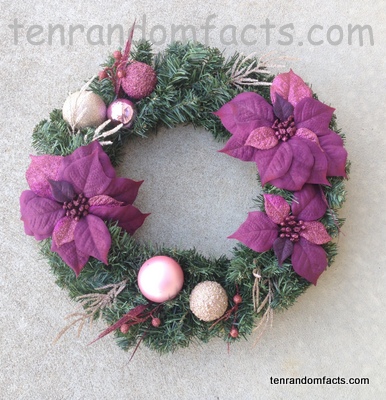
  • A Christmas wreath is an ornamental object that is used during the Christmas season, and its use today originates from a Christian-based custom.
  • Christmas wreaths are typically shaped as a ring, made with living, dried or imitation vegetation, including twigs, flowers and leaves, as well as ribbons and other Christmas-related objects.
  • ‘Christmas wreaths’ are also known as ‘Christmas crowns’, ‘advent crowns’ or ‘advent wreaths’.
  • The tradition of Christmas wreaths is said to have begun in Germany in the 1500s, by Lutherans, and the idea possibly stems from the use of wreaths in Ancient Greek and Roman times, that were used to crown those with significant achievements or community rank, or placed on their door.
  • Traditionally, Christmas wreaths contained four candles; three purple and a pink, with one lit each week in December, often on a Sunday; and a fifth white candle was sometimes also included.

Wreath, Christmas, Green, Purple, Pink, Door, Ten Random Facts, Season

  • The idea to use candles in Christmas wreaths to countdown the Advent, was possibly invented by a German pastor, Johann Wichern, in the mid 1800s, as a daily advent calendar for children.
  • The traditional idea of a Christmas wreath has became a popular Christmas decoration and they started being hung on doors by the 1900s, and are now commonly found on doors without candles.
  • Christmas wreaths are commercially available during the Christmas season, and the most common wreaths obtainable are factory made objects.
  • Christmas wreaths are often made with the colours of red, green, white or purple, traditionally symbolising Jesus’ blood, life, joy and sacrifice or forgiveness.
  • The making of Christmas wreaths is a common Christmas craft activity and the base can be made from wire, styrofoam, cane or other material, and other supplies can include fabric, wrapped lollies and candy, or numerous other items.
Bibliography:
Advent Wreath, 2014, Wikipedia, http://en.wikipedia.org/wiki/Advent_wreath
History of the Wreath, 2014, ProFlowers, http://www.proflowers.com/blog/history-of-the-wreath
History of the Wreath, n.d, Northwoods Inspirations, http://www.northwoodsinspirations.com/wreath%20History1.htm
Wilson G, History of the Christmas Wreath, n.d, Wilson Evergreens, http://www.wilsonevergreens.com/christmas-wreath-history/

Amazon:     

Bourges Cathedral

Bourges Cathedral

The architecture of Bourges Cathedral is quite amazing!

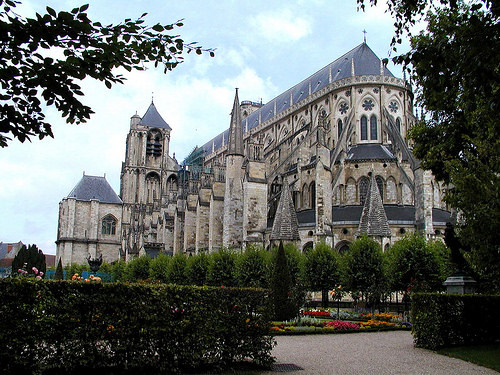
  • Bourges Cathedral is a cathedral found in France’s Bourges, in Europe, that is used and was built by Roman Catholics.
  • ‘Bourges Cathedral’ is also known as ‘Cathédrale Saint-Étienne de Bourges’ in French.
  • The construction of Bourges Cathedral began around 1195, although other churches had already inhabited the site from the 200s.
  • Bourges Cathedral was likely used from 1214 onwards, as significant parts had been built, and the main part was completed by 1230, however the building was not consecrated until 1324, as construction continued until the late 1400s.
  • Bourges Cathedral has been largely preserved throughout conflicts such as the World Wars and the French Revolution, although nearby related buildings were destroyed.
Bourges Cathedral, Church, Roman Catholic, Side, Garden, Outside, France, Ten Random Facts, Gothic Architecture, Building
A View of Bourges Cathedral
Image courtesy of James Mitchell/Flickr
  • The nave, the central meeting area, of Bourges Cathedral reaches a height of 37 metres, and the cathedral covers an area of 5,900 square metres (63,500 feet), while it sits on an area of 8,500 square metres (91,500 square feet).
  • Bourges Cathedral has numerous features such as stained-glass windows, carvings, and a crypt, and is a great example of Gothic architecture, and as such was declared a Historical Monument in 1837, and a UNESCO World Heritage Site in 1992.
  • Bourges Cathedral is the base for the Archbishop of Bourges, who, from 2007, was Armand Maillard, while Henri de Sully, who died in 1200, was the archbishop who ordered the original construction of the cathedral.
  • Tourists may visit Bourges Cathedral on most days, except for Sunday morning when the cathedral holds services.
  • In 1506, soon after its completion, the northern tower of the Bourges Cathedral collapsed and had to be rebuilt, which was funded by donations and other means.
Bibliography:
Bourges Cathedral, 2012, French Monuments, http://www.frenchmoments.eu/bourges-cathedral/
Bourges Cathedral, 2014, Wikipedia, http://en.wikipedia.org/wiki/Bourges_Cathedral
Bourges Cathedral, 2014, UNESCO World Heritage Convention, http://whc.unesco.org/en/list/635

Amazon:     

Glass Lizard

Glass Lizard

Glass lizards are not too fragile, although they may fragment!

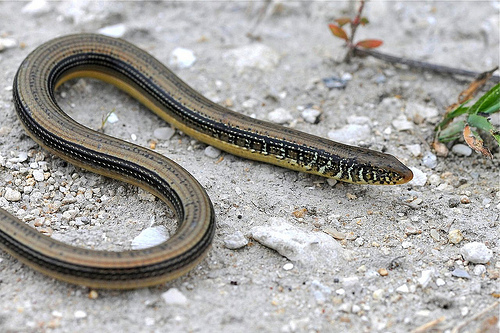
  • Glass lizards are a group of approximately 15 species of animal, that have the appearance of snake-like reptilians, but are lizards.
  • ‘Glass lizards’ are also known as ‘glass snakes’ and ‘jointed snakes’.
  • Glass lizards have the scientific name Ophisaurus and are from the family Anguidae, a family of numerous Northern Hemisphere lizards.
  • Glass lizards grow to be 0.6 to 1.2 metres (2 to 4 feet) in length, which includes the long tail, and they have a weight of 300 to 600 grams (11 to 21 ounces).
  • The diet of glass lizards mainly consist of small rodents and reptiles, insects, and spiders.
Glass Lizard, Animal, Reptile, Ten Random Facts, Field, Wild, Ground, Splendid
A Glass Lizard
Image courtesy of vladeb/Flickr
  • Glass lizards have a head that is similar to the anatomy of lizards and they generally have no legs, although small stumps can sometimes be seen in place, in some species.
  • Glass lizards can be found primarily in some Asian countries like India, Indonesia and China, as well as North Africa and the United State’s southeast.
  • Glass lizards can fracture their tails into small, moving pieces, hence their name, and the tail can be regenerated after some time, although it will generally be shorter than the first.
  • Glass lizards come in a variety of colours including green, black, grey, brown, yellow and tan, depending on the species.
  • Glass lizards are typically preyed on by large mammals, birds and snakes, and they have a lifespan of ten to thirty years.
Bibliogrphy:
Glass Lizard, 2013, A-Z Animals, http://a-z-animals.com/animals/glass-lizard/
Glass Lizard, 2014, Wikipedia, http://en.wikipedia.org/wiki/Glass_lizard

Amazon:     

Related Posts Plugin for WordPress, Blogger...