Perito Moreno Glacier

Perito Moreno Glacier

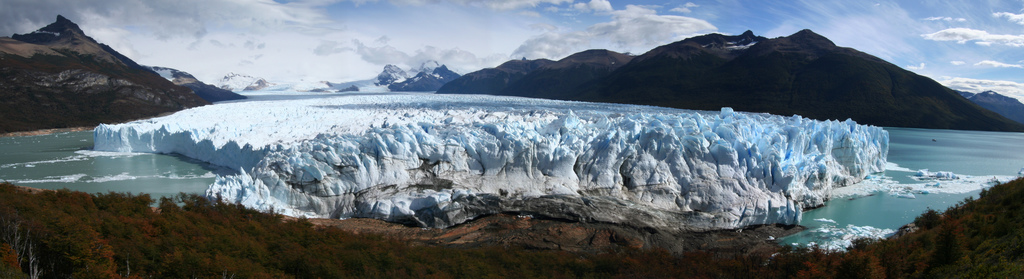
A natural ice pack: Perito Moreno Glacier.

  • Perito Moreno Glacier is a glacier that is found in the National Park, Los Glaciares, Argentina, in South America, and its source is the Southern Patagonian Ice Field found in the Andes Mountain system.
  • Perito Moreno Glacier is one of the most prominent attractions for tourists in southern South America, in the Argentine Patagonia region, and the area has vehicle access via a road.
  • Perito Moreno Glacier covers an area of 250 kilometres squared (97 miles squared) and spreads to a length of 30 kilometres (19 miles).
  • Perito Moreno Glacier has a total height of 170 metres (558 feet) of ice, with around 74 metres (240 feet) protruding from the water’s surface.
  • Perito Moreno Glacier has ruptures, due to pressure build up from dammed water, that occur approximately every four to five years, although they can occur more or less frequently, with the most recent event on the 19 January, 2013.
perito Moreno glacier, ice, iceberg, moving, 2008, Argentina, Panorama, south America, Flickr, Ten Random Facts
Panorama
Image courtesy of Steven Newton/Flickr
  • It is possible to venture onto Perito Moreno Glacier through an organised tour, with trails ranging from one and a half to five hours.
  • Perito Moreno Glacier sees winds that can blow up to speeds of 130 kilometres/hour (81 miles/hour).
  • Perito Moreno Glacier is a fresh water reserve, and is the third largest on earth.
  • Perito Moreno Glacier is named after Argentine’s Francisco Moreno, an explorer in the late 1800s and early 1900s, who was also known as ‘Perito Moreno’, the word ‘perito’ meaning ‘expert’ or ‘specialist’, which he officially became in 1902.
  • Perito Moreno Glacier acted as a natural barricade for Argentina during conflicts with the neighbouring Chile.
Bibliography:
Calafate – Perito Moreno Glacier – Argentina, n.d, CASCADA Expidiciones, https://www.cascada.travel/About/Calafate-Perito-Moreno-Glacier-Argentina
Perito Moreno Glacier, 2014, Wikipedia, http://en.wikipedia.org/wiki/Perito_Moreno_Glacier

Amazon:     

Giant Armadillo

Giant Armadillo

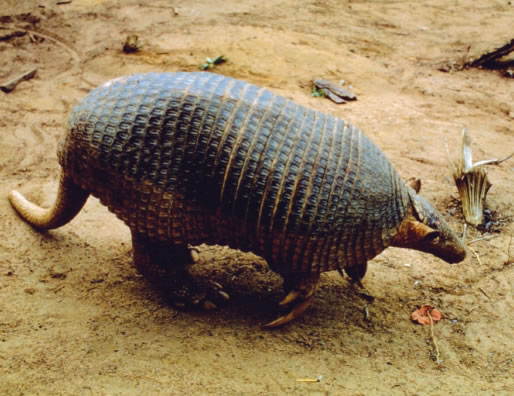
Giant armadillos dressed in armour.

  • Giant armadillos are mammals that are native to South American tropical forest areas, and are found on approximately half of the continent.
  • Giant armadillos are from the family Dasypodidae, which is the family of armadillos.
  • Giant armadillos have a tough encasing of hard scales and plates which is used primarily for defense.
  • The scientific name of a giant armadillo is ‘Priodontes maximus’ and they have a lifespan of 12 to 15 years.
  • A ‘Giant armadillos’ is also known as a ‘tatou,’ ‘ocarro,’ ‘tatu-canastra,’ and ‘tatú carreta’.
Giant Armadillo, Sand, Brown, Dark, Shell, Mammal, Flickr, Ten Random Facts
Giant Armadillo
Image courtesy of Amareta Kelly/Flickr
  • Giant armadillos’ diet mainly consists of termites and ants, but also vegetation, worms, spiders, snakes and larvae.
  • Giant armadillos have long claws including one claw that is sickle-like, 80 to 100 teeth and they are also nocturnal.
  • Giant armadillos grow up to 150 centimetres (59 inches) long, including the tail that is approximately a third of its length, and from 28 to 54 kilograms (62 to 119 pounds) in weight.
  • Giant armadillos generally do not live with others of the same species, and usually live in burrows.
  • Giant armadillos are a threatened species and are listed as vulnerable, due to the destruction of their habitat and poaching by humans for their meat and for black trade.
Bibliography:
Giant Armadillo, 2014, Wikipedia, http://en.wikipedia.org/wiki/Giant_armadillo
Giant Armadillo, n.d, Kids’ Planet, http://www.kidsplanet.org/factsheets/armadillo.html

Amazon:      

Dictionary

Dictionary

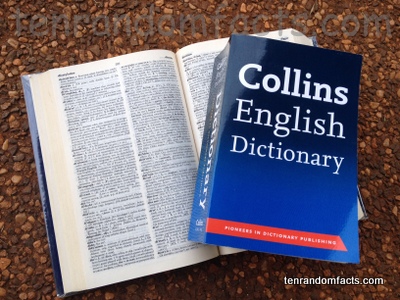
An excerpt from a dictionary:
fact (fakt) – noun
1. A thing that is known or proven to be true.

  • Dictionaries are typically a collection or book of words that usually give the definition, pronunciation, etymologies and/or phonetics of words.
  • Dictionaries are often dedicated to one or two particular languages of words and are generally alphabetically arranged.
  • The oldest dictionaries known to have existed were on stone tablets from the Semitic empire, around 2300 BC, which were discovered in Syria, West Asia, and were lists of words in both Akkadian and Sumerian languages.
  • The term ‘dictionary’ came from the word ‘dictionarius’ with the Latin meaning ‘of words’, which is believed to have been invented in 1220 by John of Garland (also known as Johannes de Garlandia), and English philologist.
  • The first reliable and significantly influential dictionary in English was called ‘A Dictionary of the English Language’ and also known as ‘Johnson’s Dictionary’, by writer Samuel Johnson of Great Britain, in 1755, who took nine years to complete the task single-handedly.

Dictionary, Collins English Dictionary, Oxford Dictionary, Words, Words, Book, Ten Random Facts, Open

  • It wasn’t until 1884 that the next great dictionary was written and released in sections, known as the ‘Oxford English Dictionary’ by Oxford University Press, which took until 1928 to be completed, and was then published in 12 volumes, that continues to be updated every three months, and is still considered to be the most comprehensive source on words in English.
  • Dictionaries are traditionally printed in book form but more recently are available digitally and via the internet.
  • There are two main types of dictionaries, specialised and defining, with the first a dictionary of technical words and the latter of simple, generally used words.
  • ‘Dictionaries’ are also known as ‘lexicons’, and ‘lexicography’ is the activity of compiling or writing a dictionary.
  • Comprehensive dictionaries generally contain all or most words in use in the language, however, most printed forms of a dictionary contain only the most generally used words to keep the book size and cost manageable, as comprehensive ones like the Oxford English Dictionary contain over 21, pages.
Bibliography:
Dictionary, 2014, Wikipedia, http://en.wikipedia.org/wiki/Dictionary
Our modern age has dictionaries of all kinds and sizes, 2014, Wyzant, http://www.wyzant.com/resources/lessons/english/etymology/words-mod-dictionaries

Amazon:       

Clove

Clove

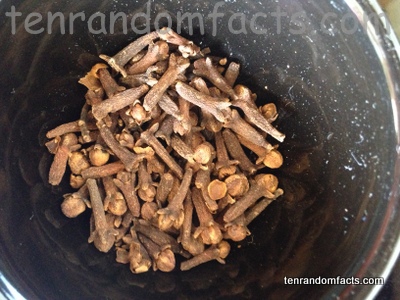
Cloves add another interesting flavour.

  • Cloves are the unopened and dried flower buds of the clove tree, Syzygium aromaticum, that belongs to the myrtle family, Myrtaceae.
  • Cloves are native to some of the Maluku Islands in Indonesia, and one of the biggest producers of the spice now is Africa’s Pamba Island.
  • Cloves appear to be small nails, and the name comes from Latin ‘clavus’, meaning nail, and they are sometimes used with an orange to make pomanders.
  • Cloves are popularly used as a spice in dishes of meat, curry, marinade and fruit, as well as baked goods, commonly in Asia, Africa and the Middle East.
  • Cloves contain the chemical eugenol, which produces approximately 85% of the strong flavour.

Clove, Brown, Whole, Ten Random Facts, Bowl, Australia, Spice, Flower bud

  • Cloves have been used in some cigarettes and can be used to repel ants.
  • Cloves and their oil are sometimes used in medicine as a painkiller for toothaches.
  • In the 1600s and 1700s, the Dutch East India Company had a monopoly on the growing and trading of cloves in Indonesia, and in 1770, Pierre Poivre, a French horticulturalist, secretly obtained some seedlings from the spice trees from Indonesia, which he eventually introduced to the islands of Mauritius and Réunion.
  • Cloves are very high in manganese, and they also contain vitamin K and vitamin C, as well as small quantities of other minerals and vitamins.
  • Cloves can be bought ground or whole, and the ground spice loses its flavour quickest.
Bibliography:
Clove, 2014, Wikipedia, http://en.wikipedia.org/wiki/Clove
Cloves, 2014, The World’s Healthiest Foods, http://www.whfoods.com/genpage.php?tname=foodspice&dbid=69

Amazon:     

Society Garlic

Society Garlic

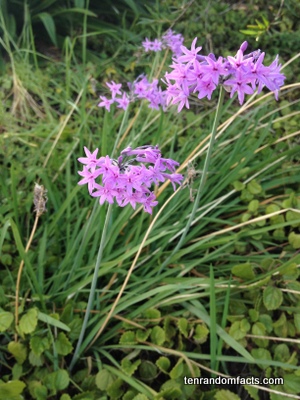
Society garlic is not actually garlic.

  • Society garlic is a perennial plant that flowers and grows from a bulbous rhizome, and it is from the amaryllis family, Amaryllidaceae, and the subfamily Allioideae, that was formerly called the Alliceae family (family of onions or alliums).
  • The leaves, flowers and stems of society garlic can be safely used in cuisine, often for garlic-like flavouring, popularly in salads or soups.
  • ‘Society garlic’ is also known as ‘wild garlic’ and is native to southern parts of Africa, and gets its common name for it being the preferred and more ‘polite’ herb for social events among the Dutch settlers there, rather than real garlic.
  • The scientific name of society garlic is ‘Tulbaghia violacea’, named after the mid 1700s governor of the Cape of Good Hope, Ryk Tulbagh, and ‘violacea’ refers to the appearance of the violet-like flowers.
  • Society garlic can grow to be a height of 60 centimetres (24 inches) and has long, thin leaves.

Society Garlic, Flowers, Pink, Onion, Ten Random Facts, Violet, Purple, flower, grass, Australia

  • Society garlic plants typically bloom in late spring, summer and autumn seasons, and have groups of flowers that appear on the top of a long stem.
  • Society garlic flowers are small and star shaped, with six petals and generally appear in shades of purple, most commonly violet.
  • Society garlic is commonly grown for decorative purposes in gardens or pots and has a distinct garlic smell.
  • Society garlic has won the Award of Garden Merit by the Royal Horticultural Society.
  • Society garlic is drought tolerant and generally prefers a sunny position in the garden.
Bibliography:
Tulbaghia violacea – Harv., 2012, Plants for a Future, http://www.pfaf.org/user/Plant.aspx?LatinName=Tulbaghia+violacea
Tulbaghia violacea, 2013, Wikipedia, http://en.wikipedia.org/wiki/Tulbaghia_violacea
Tulbaghia violacea, 2004, Shireen Harris, http://www.plantzafrica.com/planttuv/tulbaghviol.htm

Amazon:     

Sydney Opera House

Sydney Opera House

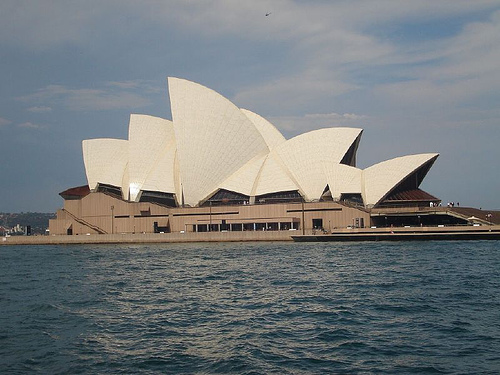
The Sydney Opera House – an iconic landmark.

  • The Sydney Opera House is an iconic building that is mainly dedicated to the performing arts.
  • The Sydney Opera House is located in one of Australia’s state capitals, Sydney, in Sydney Harbour, New South Wales.
  • The Sydney Opera House was designed by Jørn Utzon, an architect from Denmark, that was the winning design decided upon in an international design competition in 1957.
  • Every year, the Sydney Opera House holds approximately 1500 performances and sees 8.2 million visitors.
  • On 28 June, 2007, the Sydney Opera House was listed as a UNESCO World Heritage Site, and at the time, was the youngest building to be added to the list.

Sydney Opera House, White, Sail, Shell, Performing Arts, Music, Centre, Habour, Ten Random Facts, Australia

Sydney Opera House
Image courtesy of Australia Photos (Flickr)
  • The Sydney Opera House has a design type of modern expressionist, with the notable feature of over a million individual white to cream ceramic tiles across the ten ‘shells’ or ‘sails’.
  • The Sydney Opera House is 65 metres (213 feet) in height and 4.4 acres (1.8 hectares) in area, and is located on land that was previously used as a tram depot and even earlier, as Fort Macquarie.
  • Construction on the Sydney Opera House began in 1959 and cost $102 million to build, which was over 14 times the proposed budget.
  • The idea of having a ‘Sydney Opera House’ was proposed by Eugene Goossens in the 1940s, who was a composer and conductor, and at the time, the director of NSW State Conservatorium of Music.
  • The Sydney Opera House was officially opened on the 20 October, 1973, by Queen Elizabeth II, but the designer, Utzon, was not credited.
Bibliography:
A Danish architect, an Australian icon: the history of the Sydney Opera House, 2013, ABC News, http://www.abc.net.au/news/2013-10-21/anthony-burke-on-sydney-opera-house-history/5034028
Sydney Opera House, History and Heritage, 2014, Sydney Opera House, http://www.sydneyoperahouse.com/the_building_history_heritage.aspx
Sydney Opera House, 2014, Wikipedia, http://en.wikipedia.org/wiki/Sydney_Opera_House

Amazon:       

Related Posts Plugin for WordPress, Blogger...