Caper

Caper

Feeling lively? Try a caper!

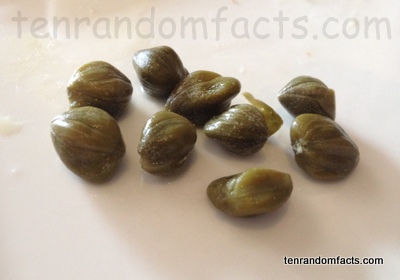
  • A caper is a small, edible bud of the flower that grows on the bush of the same name, native to the Mediterranean area and some parts of Asia.
  • The scientific name of the caper bearing plant is Capparis spinosa and it is from the family Capparaceae, the family of capers, which is considered to be closely related to the mustard family of Brassicaceae.
  • Capers are roughly oval in shape and are an olive-green colour, and the leaves and berries of the plant are also edible.
  • Capers are sold commercially and are generally categorised in sizes from 7 to 14 millimeters (0.28 to 0.55 of an inch), with different names for each size – the smallest being ‘nonpareil’ and the largest being ‘grusa’, though the smaller ones are more sought after.
  • Capers are commonly dried and salted, and often pickled in vinegar or brine, to enhance the flavour before consuming as is, or lightly cooked.
Capers, Vegetable, Trivia, Ten Random Facts, Vegetation, Green, Food, Culinary

  • Foods that may include capers as an ingredient include tartare sauce and other condiments, salads, pasta dishes, and meat dishes including fish.
  • The flavour of capers tends to be a blend of vinegar or other pickling solution if any, salt, and a flowery mustard or peppery taste.
  • Due to their fragile nature, capers are unable to be collected using machinery and thus must be picked by hand.
  • The cultivation of caper buds as food originates as early as 2000 BC, and their use has become more widespread throughout the centuries.
  • Capers are extremely high in sodium and a good source of vitamin K and copper, and they have many other vitamins and minerals.
Bibliography:
Caper, 2015, Wikipedia, https://en.wikipedia.org/wiki/Caper
Fillippone P, What Are Capers?, 2015, About Food, http://homecooking.about.com/od/cookingfaqs/f/faqcapers.htm
So What The Hell Are Capers Anyway?, 2014, The Huffington Post, http://www.huffingtonpost.com.au/2014/05/30/what-are-capers_n_1276491.html?ir=Australia

Mawsynram

Mawsynram

You’ll need more than an umbrella at Mawsynram.

  • Mawsynram is a village in India’s Meghalaya, in Asia, above Bangladesh, that is notable for its wet climate.
  • Mawsynram is one of the wettest places on earth, and in 2015 it still held the Guinness World Record for having the highest rainfall annually, despite the claim that a couple of communities in South America’s Columbia receive even more rainfall, on average, in a year.
  • Mawsynram is found in the East Khasi Hill area, and sits at a height above sea level of approximately 1400 metres (4,600 feet).
  • The annual rainfall of Mawsynram is just over 11.8 metres (38.9 feet), most of which falls in April to October each year.
  • The term ‘Maw’ in ‘Mawsynram’ is translatable into English as ‘stone’, and it comes from the native Khasi language.
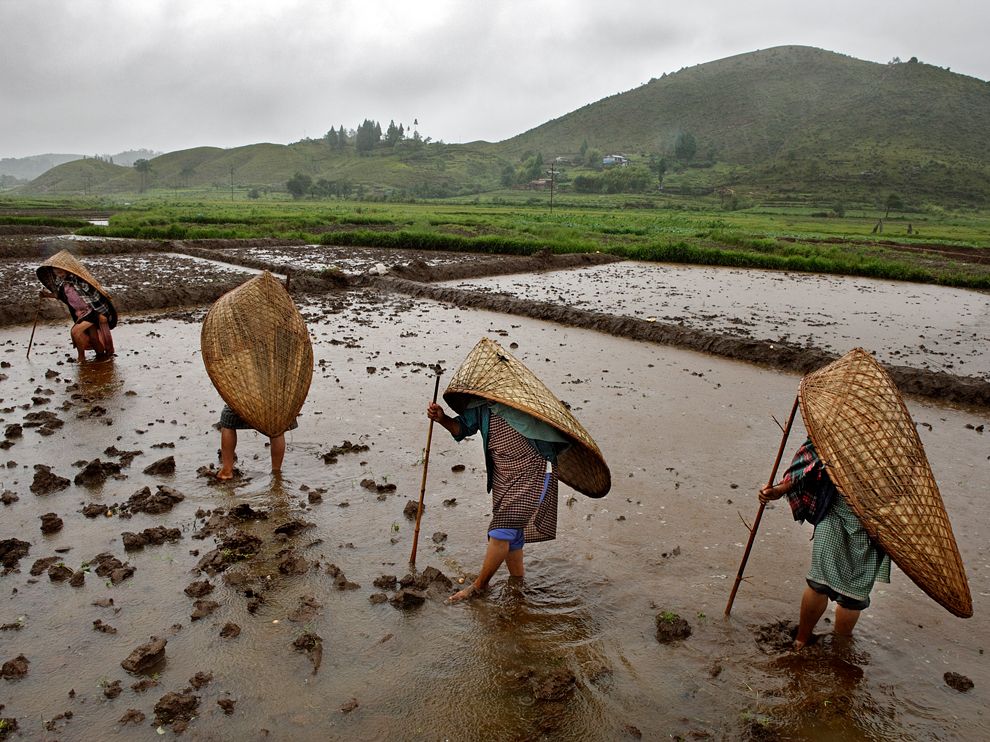
Mawsynram, Women, Rain, Native, Hat, India, Place, Trivia, Ten Random Facts, Paddies
Women of Mawsynram
Image courtesy of Johnny Haglund
  • Historic megaliths are said to be located in the Mawsynram area, and there is a limestone cave featuring a large stalagmite, among others, in the shape of a notable Hindu deity.
  • It is not uncommon for clouds to move through buildings in the village of Mawsynram, and vegetation is used on the rooves of buidings to deaden the sound of the rain.
  • It was not until the late 1900s that Mawsynram received improved living conditions, with the introduction of electricity, running water and hard surfaced roads.
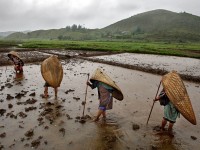
  • Many of the women of Mawsynram make ‘knups’ for the locals, that are made of woven bamboo and grass or leaves, and they function like an umbrella though they have the appearance somewhat of a turtle shell, and are worn over the head and back and do not need hands to continually hold them in place.
  • As Mawsynram features much flowing water caused by intense rainfall, live rubber tree roots are manipulated by locals to act as permanent bridges.
Bibliography:
Mawsynram, 2015, Travel India, http://travel.india.com/cherrapunjee/places-to-visit/nature-mawsynram/
Mawsynram, 2015, Wikipedia, https://en.wikipedia.org/wiki/Mawsynram
Mawsynram in India- the wettest place on earth, 2013, NDTV, http://www.ndtv.com/india-news/mawsynram-in-india-the-wettest-place-on-earth-529799

Amazon:       

Ram-air Parachute

Ram-air Parachute

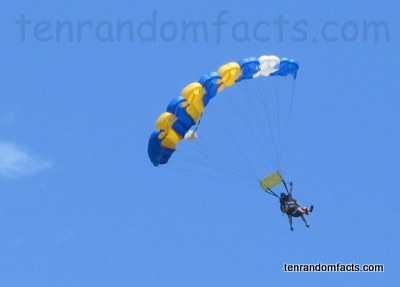
Ram-air parachutes are full of air.

  • Ram-air parachutes are a type of parafoil parachute or canopy, used to lower one’s descent speed so that safe arrival on the ground can be achieved, or to glide in the air, although those used for gliding purposes are typically called a ‘paraglider’.
  • Ram-air parachutes can be either rectangular in shape, known in parachuting jargon as ‘square’, or tapered, known as ‘elliptical’.
  • The primary advantage ram-air parachutes have over other variants is greater control over direction and speed, and the design also provides lift.
  • A ram-air parachute is made of two fabric layers, typically rip-stop nylon, with a cell-like airfoil in between, which when moving, automatically fills with air.
  • Ram-air parachutes that are the combination of an elliptical shape and small, are notoriously more difficult to control, compared to larger or square ones, primarily due to increased moving speed.

Ram-air Parachute, Trivia, Ten Random Facts, Flight, Gliding, Jump, Yellow, Blue, Rectangular, Sport, Invention

  • The parafoil design that the ram-air parachute is based on was designed by Canadian Domina Jalbert, in the late 1950s to early 1960s, a patent for which was filed in 1964.
  • The deployment of ram-air parachutes was originally so fast that is was dangerous, however, they have since been designed so that a slower deployment speed is achieved to avoid body injuries, though these speeds differ greatly depending on the parachute.
  • The ram-air parachute has been the most common form of parachute used for humans since its rise in the 1970s.
  • Ram-air parachutes are used in a number of different applications including sky diving, base jumping, paragliding, and for military purposes.
  • Ram-air parachutes and paragliders generally range from 6.5 to at least 41 square metres (70 to 441 square feet) in size, and sizes vary according to their use and user expertise.
Bibliography:
O’Neil A, What’s A “Ram-Air” Canopy?, n.d, About Sports, http://extremesports.about.com/od/air-sports/g/ram-air.htm
Parachute, 2015, Wikipedia, https://en.wikipedia.org/wiki/Parachute#Ram-air
Skydiving FAQ, n.d, Fabulous Rocketeers, http://www.fabulousrocketeers.com/Photo_Sabre2.htm

Amazon:       

Silver Gull

Silver Gull

It’s the survival of the scavengers when it comes to silver gulls.

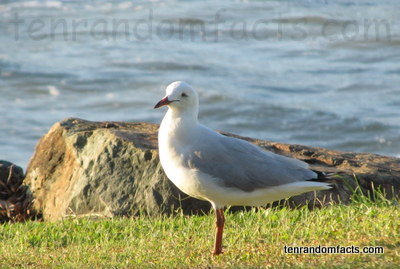
  • Silver gulls are a species of seagull native to coastal areas in Australia, as well as New Zealand and New Caledonia in the South Pacific Ocean.
  • The scientific name of a silver gull is Chroicocephalus novaehollandiae, and it is from the family Laridae, the family of gulls, although it was previously part of the Larus genus and known as Larus novaehollandiae.
  • Silver gulls are also known as ‘red-billed gulls’, ‘sea pigeons’ and simply as ‘seagulls’.
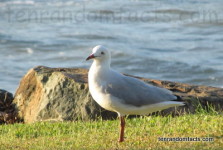
  • The feathers of silver gulls range from white to grey in colour, with some parts of their wings coloured black, and they have a red beak, as well as a red ring around their eyes.
  • Silver gulls grow to be 38 to 45 centimetres (15 to 18 inches) in length, with a wingspan of approximately 91 to 96 centimetres (36 to 38 inches), and they generally weigh between 260 to 350 grams (9 to 12 ounces).

Silver Gull, Animal, Bird, Trivia, Random Facts, Australia, Seagull, Grass, Water

  • The call of a silver gull is loud and it typically makes a ‘kwarwh’ or similar sounding noise.
  • The diet of silver gulls consists primarily of fish, insects, worms and crustaceans, as well as scraps scavenged from waste piles, and they are especially common around rubbish dumps.
  • Silver gulls build nests low to the ground, mostly from vegetation, and the female will typically produce an average of three eggs, which hatch after three to four weeks, and the grey-brown coloured young are raised by both parents.
  • Populations of silver gulls have increased significantly since the 1950s as a result of the large quantities of food waste that Australians now produce, and they have become so common that they have become a pest in some areas, and they are also impacting the breeding of other bird species.
  • Silver gulls are opportunists and are known to boldly wait for humans to drop food in parks or beach areas; and they have also been observed to have kleptoparasitic behaviour, where they steal food from other birds or animals.

Bibliography:
Silver Gull (Chroicocephalus novaehollandiae), n.d, Wildscreen Arkive, http://www.arkive.org/silver-gull/larus-novaehollandiae/
Silver Gull, 2012, Birdlife Australia, http://birdlife.org.au/bird-profile/Silver-Gull
Silver Gull, 2015, Wikipedia, https://en.wikipedia.org/wiki/Silver_gull

Amazon:       

Black Forest Cake

Black Forest Cake

Black Forest cake is a slice of sweet Germany.

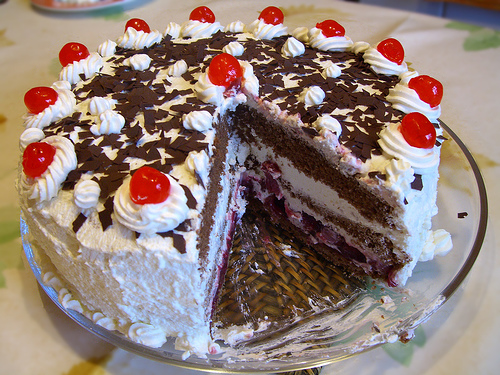
  • Black Forest cake is a layered dessert made primarily of cream, cake and cherries, and it is famously German.
  • ‘Black Forest cake’ is also known as ‘Black Forest gateau’, ‘Black Forest cherry cake’, and ‘Black Forest cherry torte’, while the German term for the cake is ‘Schwarzwälder Kirschtorte’.
  • The typical ingredients of the layers of Black Forest cake are chocolate cake, cherries that are usually sour, and whipped cream, while more cream, cherries and chocolate flakes are often used for decoration.
  • Black Forest cake is said to be named after the liquor traditionally used as an ingredient to flavour the cake, ‘Kirschwässer’ – a cherry brandy, which is believed to have originated in the Black Forest of Germany, although other theories exist, including reference to the cake having the appearance of the traditional Black Forest costume worn by women.
  • It has been alleged that confectioner Josef Keller invented the Black Forest cake in 1915, at the Cafe Agner in Bad Godesberg, in Germany, Europe, and while this has been disputed, Keller’s hand written recipe is said to still exist.
Black Forest Cake, Trivia, Ten Random Facts, Cream, Cake, Food, Culinary, Germany, Layers, Decorated
Black Forest Cake
Image courtesy of Mikel Ortega/Flickr
  • To be officially known as ‘Schwarzwälder Kirschtorte’, Black Forest cake requires the use of Kirschwasser, or Kirsch as it is sometimes known; cherries; cream or butter cream; as well as a minimum of three percent cocoa present in the cake batter.
  • The earliest published written record of Black Forest cake was in 1934, by John Martin Erich Weber, a German confectioner, in his book ‘250 Konditorei-Spezialitäten und wie sie entstehen’, translated in English literally as ‘250 pastry specialties and how they originate’.
  • Today, Black Forest cake is well known worldwide and one of the most popular cakes in Germany, though it was only listed as the thirteenth most famous German cake in 1949.
  • In mid 2006, a world record for the largest Black Forest cake was set, created in Germany’s Europa Park, and it had an area of approximately 80 square metres (861 square feet) and a weight of 2,963 kilograms (6,532 pounds).
  • A dessert from Sweden, known as ‘Schwarzwaldtårta’, also translated as ‘Black Forest cake’, exists, however it is made of layers of meringue and whipped cream and garnished with chocolate, and as it contains no cake batter, it is typically gluten free.
Bibliography:
Black Forest Cake, 2015, Wikipedia, https://en.wikipedia.org/wiki/Black_Forest_cake
The History of Black Forest Cherry-torte, n.d, Food History, http://www.kitchenproject.com/history/BlackForestCake/index.htm
Recipe: Black Forest Cake, 2015, The Nibble, http://www.thenibble.com/reviews/main/cookies/cakes/black-forest-cake-recipe.asp

Amazon:        

ʻĪao Valley

ʻĪao Valley

ʻĪao Valley is the perfect mix of rainforest and rain.

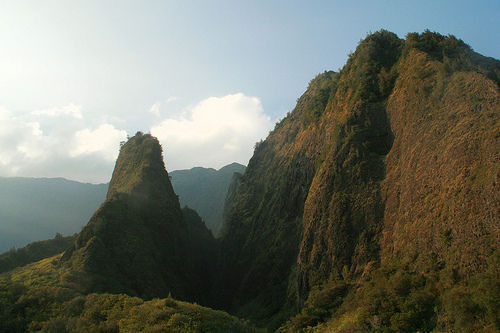
  • ʻĪao Valley is a valley located in the western area of Maui, an island of Hawaii, which is part of the United States.
  • ʻĪao Valley has an abundance of lush rainforest flora, although it is said that most of the plants are not native to the area.
  • The United States listed ʻĪao Valley as a National Natural Landmark in 1972, and as such, it is Division of State Parks logomaintained by the Department of Land and Natural Resources.
  • ʻĪao Valley State Monument, the national park encompassing the valley, covers an area of 2.5 hectares (6.2 acres), and a road makes the park easily accessible to visitors.
  • The term ‘ʻĪao’ is from the Hawaiian language, and when translated into English it means ‘toward the dawn’ or ‘cloud supreme’.
ʻĪao Valley, Trivia, Ten Random Facts, Place, Landmark, Hawaii, Forest, America, Needle
Part of ʻĪao Valley
Image courtesy of Mary and Andrew/Flickr
  • The ʻĪao Needle’, a volcanic plug of ʻĪao Valley, is a notable landmark in the area, reaching an above sea level height of 685 metres (2250 feet) and approximately 365 metres (1200 feet) above ground.
  • According to Hawaiian mythology, the god and provider of life, Kāne, is associated with ʻĪao Valley.
  • In its history, ʻĪao Valley has been used as a royal burial site, as well as a major battleground in 1790, when King Kamehameha I conquered the island in his bid to establish the Kingdom of Hawaii.
  • ʻĪao Valley is a common place visited by tourists, who will often explore the site through hiking, and lookouts and a botanical garden are located on the main trail.
  • The peak of Puʻu Kukui, located above the ʻĪao Valley, receives an average of around 9.8 metres (32 feet) of rainfall annually, making it one of the ten wettest places on earth.
Bibliography:
‘Iao Valley State Park, 2015, Maui Guidebook, http://mauiguidebook.com/central-maui/iao-valley-state-park/
Iao Valley, 2015, Wikipedia, https://en.wikipedia.org/wiki/Iao_Valley
Iao Valley State Park, 2015, Hawaiian Tourism Authority, http://www.gohawaii.com/en/maui/regions-neighborhoods/central-maui/iao-valley-state-park/

Amazon:        

Related Posts Plugin for WordPress, Blogger...