Gas Cylinder

Gas Cylinder

No balloon helium without gas cylinders.

  • ‘Gas cylinders’ are also known as ‘gas tanks’ and ‘gas bottles’.
  • Gas cylinders are hollow storage that is made to withstand highly pressurised gas.
  • Gas cylinders are typically made of non-welded and non-corrosive steel or carbon fibre, and often contain composite materials.
  • Depending on the country, gas cylinders must be tested and checked often to ensure the cylinder has not become weak or corroded, as this can be very dangerous.
  • Gas cylinders that contain helium gas have to withhold the highest interior pressure.
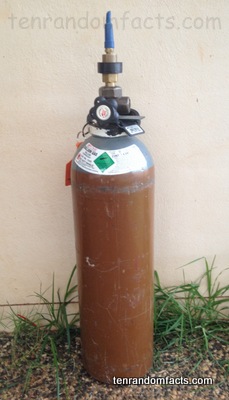
Gas cylinder, helium, compressed, balloon, nozzle, brown, Ten Random Facts

  • When storing, gas cylinders should be stored upright and chained down to prevent the cylinder from falling over.
  • Gas cylinders are sometimes colour coded in some countries to indicate the type of gas it may contain, although one should not rely on the colour coding as it is best to always check the label.
  • Animal bladders were used as types of early gas cylinders in the 1700s.
  • Seamless steel pipes were invented in the late 1800s in Germany by two Mannesmann brothers, Max and Reinhard, which were quickly used as gas cylinders, and are similar to today’s versions.
  • The gas contained in a gas cylinder usually exits via a valve at the top of the container.
Bibliography:
An Industry under Pressure, 2005, GAWDA, http://www.weldingandgasestoday.org/index.php/2005/06/an-industry-under-pressure/
Gas cylinder, 2014, Wikipedia, http://en.wikipedia.org/wiki/Gas_cylinder

Amazon:     

Waterbuck

Waterbuck

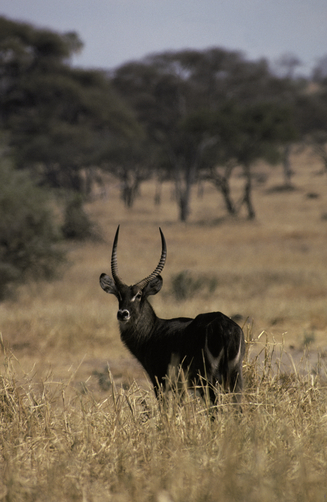
Waterbucks do not buck water.

  • Waterbucks are native to Africa’s sub-Saharan area, and their are two main categories of the animal – ‘ellipsen’, that has a white ring on it’s rear end, and ‘defassa’, which has a white patch instead of the ring.
  • Waterbucks grow to be approximately 1 to 1.3 metres (3.3 to 4.3 feet) in height to the top of their shoulder and weigh 160 to 300 kilograms (350 to 660 pounds).
  • Waterbucks are scientifically known as ‘Kobus ellipsiprymnus’, and are from the family bovid, the family of mammals with unbranched horns, and are one of six species of African antelope.
  • Contrary to popular African belief, the meat of a waterbuck is edible, although it may not be tasty.
  • Only male waterbucks have horns, and they are long and slightly curved, and they grow longer with age.

Cape Waterbuck, Svannah, Alert, Tanzania, Africa, Antelope, Animal, Ten Random Facts, National Geographic

Waterbuck
Image courtesy of National Geographic
  • Waterbucks live in habitats of scrubs and grassy plains, that have much grass and close access to water to fulfill dietary needs.
  • Waterbucks usually live in small herds, in all male groups, all female groups, or mixed groups, although the number of animals in a herd can be quite numerous.
  • Waterbucks may enter bodies of water to hide from predators such as hyenas, lions and leopards, and even though they don’t enter the water much, they are good swimmers.
  • Waterbucks generally live up to an age of 18 years, and the females usually give birth to a single calf each year, which is hidden away for a number of weeks.
  • Waterbucks have an off-putting odour that comes from their sweat glands, that deters prey and affects the flavour of their meat.
 Bibliography:
Huffman B, Waterbuck, 2004, Ultimate Ungulate, http://www.ultimateungulate.com/Artiodactyla/Kobus_ellipsiprymnus.html
Waterbuck, 2013, Wikipedia, http://en.wikipedia.org/wiki/Waterbuck

Amazon:        

Shirley Temple

Shirley Temple

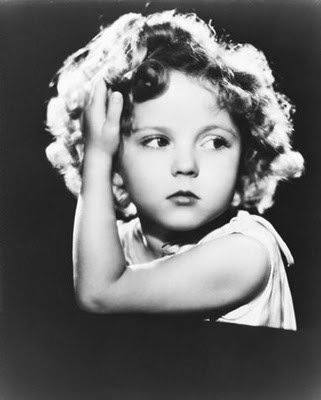
Shirley Temple: a very young star of the depression era.

  • Shirley Temple, born on 23 April, 1928, in Santa Monica, in the USA’s California, was a juvenile actress from three years old.
  • Shirley Temple married first in 1945 to John Agar, had a daughter, and divorced a few years later, and remarried in 1950 to Charles Black whom she was married to for 54 years until he died, the marriage of which produced a daughter and a son.
  • Shirley Temple was the ‘world’s number one box-office star’ for four years in a row; the first juvenile actress to win an Oscar (Juvenile Oscar), an award she received in 1935 for ‘outstanding contributions to screen entertainment’; and she also won other notable awards.
  • Shirley Temple is known for her star role in the film ‘The Little Princess’, in 1939, which was her first Technicolour movie, and she featured in at least 40 films in her 19 years as an actress.
  • Shirley Temple retired from acting in 1950 after starring in a number of consecutive low profit films, and after losing an acting spot in ‘Peter Pan’.

Young, juvenile actress, Black and White, Shirley Temple Black, Kid, Ten Random Facts, Flickr

Young Temple
Image courtesy of Gushi Soda/Flickr
  • Shirley Temple ventured into the political industry in 1967, and was the first Chief of Protocol of the United States to be female in gender, from 1976 to 1977.
  • Shirley Temple was one of the first famous women to announce their breast cancer to the public, being diagnosed in 1972 and announced in 1973.
  • Shirley Temple died from natural causes on 10 February, 2014, in California, at 85 years of age.
  • As an adult, Shirley Temple became a diplomat, which included work as a United States ambassador to Ghana and Czechoslovakia.
  • As an actress, Shirley Temple generally worked for 20th Century Fox, as well as Universal, Paramount and Warner Bros studios.
Bibliography:
Shirley Temple, 2014, Wikipedia, http://en.wikipedia.org/wiki/Shirley_Temple
Brumfield B, Famed former child actress Shirley Temple dies, 2014, CNN, http://edition.cnn.com/2014/02/11/showbiz/hollywood-shirley-temple-death/
Shirley Temple: the superstar who had her childhood destroyed by Hollywood, 2008, Daily Mail
http://www.dailymail.co.uk/tvshowbiz/article-560626/Shirley-Temple-superstar-childhood-destroyed-Hollywood.html

Amazon:      

Chocolate Brownie

Chocolate Brownie

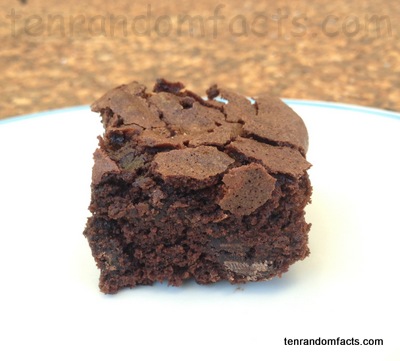
Do you like your chocolate brownies fudgy or cakey?

  • Chocolate brownies are a cooked, sweet food that resembles something between a cookie and a cake, and are presented in the shape of a bar or a square.
  • Chocolate brownies often have the texture of cake or fudge, and can have additional nuts, frosting or icing, cream, chocolate chips or the like.
  • Chocolate brownies are generally made with flour, butter, eggs, cocoa powder or chocolate, and sugar.
  • A chocolate brownie is often served by itself as a snack or dessert, with ice-cream, cream or icing sugar, often as snacks with tea, milk or coffee.
  • It is believed that cake like chocolate brownies were first made by one of Chicago’s (USA) chefs from the The Palmer House Hotel, in the 1890s, for American Bertha Palmer, as a lunch box snack for ladies, originally containing walnuts and using apricot glaze.

Chocolate brownie, brown, packet mix, cooked, Slice, Single, Ten Random Facts,

  • It is rumoured that chocolate brownies were made due to a mistake of either placing chocolate in a cookie batch, no flour in batter, or no baking powder in batter.
  • Chocolate brownie recipes were first published in 1904, in two different American published cookbooks, with slight variations in the recipes, one of which was called ‘Bangor Brownies’.
  • If the chocolate brownie ingredients are altered slightly by removing or substituting the chocolate with another ingredient, it is known as a ‘blondie’.
  • Although the origin of the name is uncertain, ‘chocolate brownies’ may have come from the characters of the 1887 book ‘The Brownies: Their Book’ by Palmer Cox.
  • Chocolate brownies quickly became popular, and have remained a common treat, and their popularity has spread to a number of other nations in the world.
Bibliography:
Chocolate Brownie, 2014, Wikipedia, http://en.wikipedia.org/wiki/Chocolate_brownie
Martin C, Brownies: The History of a Classic American Dessert, 2012, History Scene, http://www.ushistoryscene.com/uncategorized/brownies/

Amazon:      

Seljalandsfoss

Seljalandsfoss

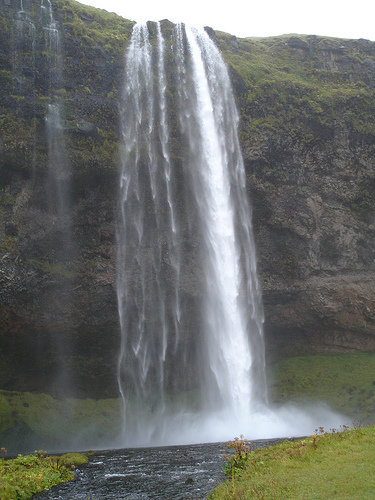
The breathtaking Seljalandsfoss waterfall:

  • Seljalandsfoss, also known as ‘Seljalands waterfall’, is a splendid waterfall that can be found in Southern Iceland.
  • Seljalandsfoss is very popular in Icelandic photography, being one of Iceland’s most famous falls.
  • Seljalandsfoss was part of the American reality television race, ‘The Amazing Race (6)’ in 2004, as a waypoint in the first leg.
  • ‘Seljalandsfoss’, the Icelandic name of the waterfall, literally means ‘selling the land of waterfalls’ in English.
  • Seljalandsfoss, from the top to the bottom, measures about 60 metres (197 feet) in height.

Saljalandsfoss, Water, Waterfall, iceland, Picturesque, Ten Random Facts, Flickr,

Seljalandsfoss
Image courtesy of Borkur Sigurbjornsson/Flickr
  • Seljalandsfoss is formed by the Seljalandsá River, which runs over the edge of a volcanic cliff.
  • Seljalandsfoss can be viewed from all angles, as a walking trail passes behind the falls, and tours to the falls are also available.
  • Seljalandsfoss features a small cascade at the top of the falls, with smaller waterfalls surrounding it.
  • The cliff of the Seljalandsfoss is believed to have been once part of the coastline of Iceland.
  • Seljalandsfoss partially freezes in winter, and the surroundings are covered in snow and ice.
Bibliography:
Seljalandsfoss, 2013, Wikipedia, http://en.wikipedia.org/wiki/Seljalandsfoss
Seljalandsfoss Waterfall, 2013, Cancuk Abroad, http://www.canuckabroad.com/places/place/seljalandsfoss-waterfall/

Amazon:     

Acrylic Paint

Acrylic Paint

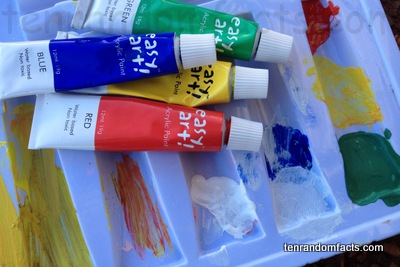
Express art beautifully using acrylic paint.

  • Acrylic paint is a paint that is made from the combination of pigment and acrylic polymer emulsion, which contains acrylic resin and water.
  • The resin used in acrylic paints was first patented in 1915 by a chemist and inventor Otto Röhm from Germany.
  • Acrylic paints began to be developed in the 1920s to the 1940s and were able to be bought commercially in the 1950s.
  • Acrylic paints is a practical paint when cleaning, as it is water soluble, making it generally easily removed with water, but once it is dried on canvas, it can prove difficult to remove.
  • Acrylic paints have characteristics that can be easily modified with mediums or water, which can affect the way it looks when dried, as well as its texture, and hardness.

Acrylic Paint, Dry, Liquid, Yellow, Blue, Green, Red, White, Tray, Tube, Easy art. Ten Random Facts

  • There are two main grades of acrylic paint, and they generally reflect the quality and how much pigment exists in the paint, with ‘artist’ or ‘professional’ grade paint being the best quality and including more pigment, with a ‘student’ or ‘studio’ grade being a cheaper paint with less pigment.
  • Acrylic paints can often resemble oil paints or water paints, or have the unique texture of acrylics.
  • Acrylic paints are often used in schools as they can be produced with non-toxic ingredients, and they are also used professionally by artists, as well as being the base or the main ingredient of water-based house paints.
  • Acrylic paints were popular during the pop art, abstract art and photorealism periods in the 1900s, and have remained very popular due to their flexible nature, providing less cracking; versatility; and their quick drying characteristics.
  • Acrylic paint is often used in techniques such as repetitive paint coats and is often glossed with a gloss medium for finishing and sealing the work.
Bibliography:
Acrylic Paint, 2013, Wikipedia, http://en.wikipedia.org/wiki/Acrylic_paint
History of Acrylic Painting, 2014, ARTmine, http://www.art-mine.com/for-sale/paintings-submedium-acrylic/history-of-acrylic-painting

Amazon:      

Related Posts Plugin for WordPress, Blogger...