Elephant Rocks

Elephant Rocks

Go visit the elephants at Australia’s Elephant Rocks.

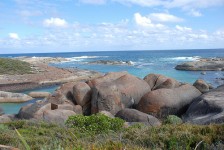
  • Elephant Rocks is a group of very large boulders found on the south coast of the Australia state, Western Australia.
  • Elephant Rocks are situated in Elephant Cove, a beach and cove area that is a popular swimming spot, that is part of the southern coast known as the ‘Rainbow Coast’.
  • The rocks at Elephant Rocks are large and typically grey and brown, and at some angles, can be seen as elephants.
  • Elephant Rocks are located in the William Bay National Park, that was named after explorer and admiral Sir William Edward Parry in the 1830s.
  • The elephant resemblance at Elephant Rocks is best seen on land, up and behind them where there is a vantage point on a walking trail.
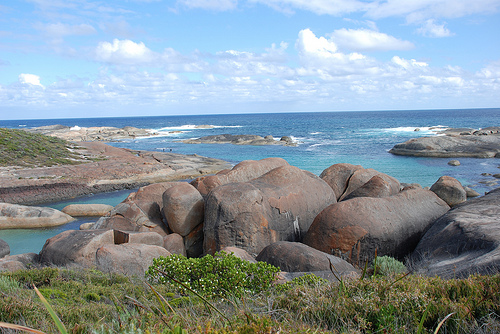
Elephant Rock, Grey, Brown, Blue, Bay, Ten Random Facts, Western Australia, William Bay National park

Elephant Rocks
Image courtesy of Fvanrenterghem/Flickr
  • The Elephant Rocks are made of granite, suggesting formation via volcanic activity.
  • The Elephant Cove, where the Elephant Rocks are situated, is rectangular in shape and often has strong waves from the Southern Ocean.
  • Elephant Rocks is the home of rich vegetation and aquatic animals such as crabs.
  • Elephant Rocks is 15 km from the nearest town; the Australian town of Denmark.
  • Elephant Rocks is accessed via a short walk from a nearby car park, and the base of the rocks and Elephant Cove can be reached via a staircase.
Bibliography:
Wells B, Elephant Cove, n.d, Wild Western Australia, http://www.westernaustralia-travellersguide.com/elephant-cove.html
Wells B, Elephant Rocks, n.d, Wild Western Australia, http://www.westernaustralia-travellersguide.com/elephant-rocks.html

Amazon:  

Plague Soldier Beetle

Plague Soldier Beetle

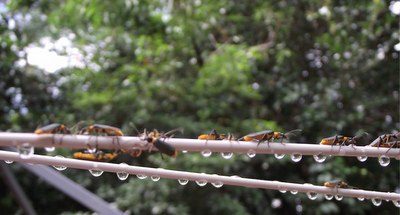
Harmless plague soldier beetles can recolour your garden!

  • Plague soldier beetles are flying beetles native to Australia, particularly the south eastern and south western parts of the country.
  • Plague soldier beetles have a mostly orange yellow body, that is covered with metallic forewings of a dark olive green colour, that almost look black, and the rest of the beetle is mostly black.
  • Plague soldier beetles have the scientific name ‘Chauliognathus lugubris, although they are sometimes known as ‘Chauliognathus pulchellus’.
  • Plague soldier beetles are named after their characteristic of plaguing during mating season, that occurs generally in summer.
  • ‘Plague soldier beetles’ are also known as ‘green soldier beetles’ and they are from the family Cantharidae, the family of soldier beetles.

Plague Soldier Beetles, Line, Washing, Orange, Black, Yellow, Ten Random Facts, Bug, Adult, Many

Plague Soldier Beetles
Image Courtesy of B Being Cool
  • Plague soldier beetle larvae live underground, eating insects, and transform into adults during spring.
  • Plague soldier beetles have colours that warn other creatures that they are poisonous, in that they excrete toxins, which is also used to prevent their eggs being contaminated.
  • At mating time, plague soldier beetles can be found swarming in their thousands, often totally covering plants and other areas, although they are said to leave little damage to the plants.
  • Plague soldier beetle adults are believed to have a diet of mainly nectar and pollen, although they also eat small insects and their eggs, and sometimes other parts of plants.
  • Plague soldier beetles live in habitats with significant numbers of trees like forests, and are often found in urban environments especially during the mating season.
Bibliography:
Plague Soldier Beetles, 2012, Museum Victoria, http://museumvictoria.com.au/about/mv-blog/?tag=chauliognathus%20lugubris
Plague Soldier Beetle, n.d, AustralianMuseum, http://australianmuseum.net.au/Plague-Soldier-Beetle
Pullen K, Insect of the week: The Plague Soldier Beetle isn’t nearly as bad as it sound, 2012, CSIRO, http://csironewsblog.com/2012/11/08/insect-of-the-week-the-plague-soldier-beetle-isnt-nearly-as-bad-as-it-sounds/

Amazon:     

White Poplar

White Poplar

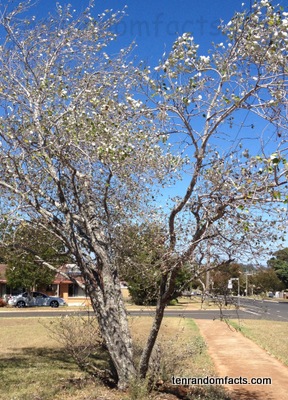
White poplars are very popular.

  • White poplars are deciduous trees from the poplar species and are native to central Europe and Asia.
  • White poplars were originally known as ‘abeles’ and are also known as ‘silverleaf poplars’ and ‘silver poplars’.
  • The scientific name for white poplars is ‘Populus alba’ and is from the family Salicaceae, the family of willows.
  • White poplars are quick growing trees and grow best in sunny areas and in moist soil.
  • White poplars grow to be a height of 16 to 27 metres (52.5 to 88.6 feet) and have leaves that are green on the top side, and are white and furry underneath, making it an eye-catching tree.

White poplar, plant, tree, Australia, Drive, Road, Park, Grass, Ten Random Facts

  • White poplars have greenish, greyish and whitish trunks that can have a notable pattern of dark coloured diamonds, although as the tree ages, the trunk can be quite rough and dark coloured.
  • White poplar flowers are up to 8 cm (3 inch) long cylindrical clusters known as ‘catkins’, with the female flowers being a yellow green colour, and the males are grey boasting a red stigma, and each tree only grows one gender of flower.
  • White poplars have been introduced into North America, South Africa and Australia, and in some states and countries have become invasive.
  • White poplar bark contains a chemical called salicylate, that can be used in aspirin medicine, and the bark can have yellow die extracted from it.
  • The inner bark and leaves of white poplars can be eaten, either made into a flour for bread or eaten raw, but they are not commonly used.


Bibliography:
Populus Alba – L, 2012, Plants for a Future, http://www.pfaf.org/user/Plant.aspx?LatinName=Populus+alba
Populus Alba, 2013, Wikipedia, http://en.wikipedia.org/wiki/Populus_alba

Amazon:  

Electrical Battery

Electrical Battery

Store up facts like a battery.

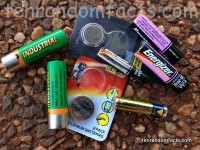
  • Batteries are a power storage cell that are used to store power in the form of chemical or electrical energy to create electricity when placed in a circuit.
  • Batteries have a positive (+) and negative (-) pole to allow electricity to flow out of the battery.
  • Approximately USD $48 billion was spent globally in the battery industry in 2005.
  • Batteries were invented by Italian Alessandro Volta, a physicist, in 1800, who designed a structure of plates of copper, zinc and brine-soaked paper that is known as the voltaic pile.
  • The original battery invention was not suitable for everyday use, leading to more practical liquid wet cell designs in 1836, and, later in the 1800s, dry cell designs that use a gel substance instead of liquid.

Battery, 3 volt, 203E. AA+, AAA+, Circle, Reusable, Rechargeable, Green, Pink, Energizer, Industrial, Varta, Dry Cell, Electrical,

  • Batteries function by multiple electromagnetic reactions creating electrons in the negative pole, transferring into electricity in the positive pole.
  • There are two main types of batteries – disposable single use batteries; or rechargeable multiple use batteries that can be charged to restore power in the battery.
  • Disposable batteries can discharge by themselves, losing up to 20% each year when stored at recommended room temperature.
  • Batteries can be very dangerous, or even fatal, if used incorrectly, as can cause explosions via short circuiting, leak toxic chemicals, or cause tissue damage if swallowed.
  • Batteries can be made at home, but produce impractical currents, using everyday items such as potatoes, coins, vinegar or salt water.


Bibliography:
Battery (Electrical), 2014, Wikipedia, http://en.wikipedia.org/wiki/Battery_(electricity)
Brain M, Bryant C & Pumphrey C, How Batteries Work, 2011, How Stuff Works, http://electronics.howstuffworks.com/everyday-tech/battery1.htm

Amazon:     

Bran

Bran

These facts are not discarded like bran.

  • Bran is the outside layer of unprocessed grains that are often used in cereals.
  • ‘Bran’ is also known as ‘miller’s bran’.
  • Bran is often removed from grains when processed, and later discarded, used in other products or sold as a separate item.
  • Bran is typically used in cereals for breakfast, bread items, and baked goods, and can be used to make alcoholic beverages, cooking oil and can be pickled.
  • Wheat bran is historically a common colouring ingredient in leather tanning solutions.

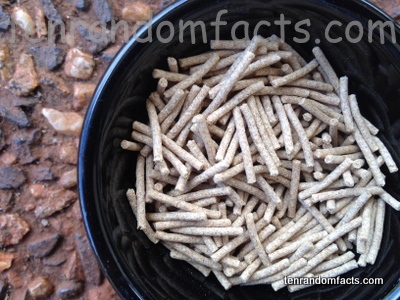
Bran, sticks, processed, wheat, homebrand, cereal, Ten Random Facts

  • Bran typically comes from wheat, rye, rice, barley, corn, millet and oat grains.
  • Bran is usually purchased from supermarkets as a coarse powder, however, with the addition of a few more ingredients, it can be bought in the form of small sticks known as ‘processed bran’, and as flakes known as ‘bran flakes’, that are typically used as a breakfast cereal.
  • Bran is commonly used in packaged animal food, in both pet and agricultural feeds.
  • Depending on the grain, bran can have a nutty or sweet flavour, and a dry, coarse texture.
  • Bran is very high in dietary fibre and high in a variety of vitamins and minerals depending on the grain.
Bibliography:
Bran, 2014, Wikipedia, http://en.wikipedia.org/wiki/Bran
What is Bran?, 2014, WiseGEEK, http://www.wisegeek.com/what-is-bran.htm

Amazon:     

John F. Kennedy

John F. Kennedy

“Ask not what your country can do for you, ask what you can do for your country” – John F. Kennedy.

  • John F. Kennedy was the United States‘ 35th president, from January 1961 until his death in 1963.
  • ‘John F. Kennedy’ whose full name was ‘John Fitzgerald Kennedy’, was also known as ‘JFK’, ‘Jack’ and ‘Jack Kennedy’.
  • John F. Kennedy was born in the United States’ town Brookline, in Massachusetts, on 29 May, 1917, and was of Irish descent.
  • John F. Kennedy, as president, led the United States through the following events: Bay of Pigs Invasion, Cuban Missile Crisis, Berlin Wall construction, the Vietnam War, the African-American Civil Rights Movement and the Apollo Space Race.
  • John F. Kennedy came close to death a number of times during his life, contracted scarlet fever as a child, damaged a disk in his spine while playing football, had colitis, and during his time in office had Addison’s disease, hyperthyroidism and ongoing back pain.
John F Kennedy, Man, President, Male, United States, In Office, 1963, Oval Office, Colour, Ten Random Facts, Flickr
President John F Kennedy
Image courtesy of U.S. Embassy New Dehli /Flickr
  • John F. Kennedy worked in the US Navy from 1941, retiring as a lieutenant in 1945, and during that time he was in charge of a patrol torpedo boat that was split in two by a Japanese destroyer ramming into it, resulting in Kennedy earning a medal.
  • John F. Kennedy became involved in politics in 1946 after his politically orientated brother Joe was killed, first as a member for the United States House of Representatives, and later as a senator from 1953 to 1960.
  • John F. Kennedy was shot in Dallas, Texas, in the United States, on 22 November, 1963, murdered by Lee Oswald, previously a US marine who had Soviet connections, who was then killed by Jack Ruby, an operator of a nightclub, two days later.
  • John F. Kennedy was a Pulitzer Prize winner, and at age 43, was the youngest US president to be elected, the first Catholic US president and the youngest US president to die at age 46.
  • John F. Kennedy married Jacqueline Bouvier in 1953, and had four children, Arabella who was stillborn, Caroline who is still living, John who died in a plane crash in 1999 at age 38, and Patrick who died two days after birth.
Bibliography:
John F. Kennedy, 2014, Wikipedia, http://en.wikipedia.org/wiki/John_F._Kennedy
John F. Kennedy, n.d, The White House, http://www.whitehouse.gov/about/presidents/johnfkennedy

Amazon:  

Related Posts Plugin for WordPress, Blogger...