Plitvice Lakes National Park

Plitvice Lakes National Park

Plitvice Lakes National Park is an old park with new splendour.

  • Plitvice Lakes National Park is a national park located in the mountains of Croatia, Europe, where it is the largest park, and it was established in 1949.
  • Plitvice Lakes National Park has an area of 296.85 square kilometres (114.61 square miles).
  • Plitvice Lakes National Park became a UNESCO World Heritage Site in 1979, and in 2000, the parks borders were extended to include underground water flows.
  • Plitvice Lakes National Park is seen by more than 1 million people annually, and there are hiking paths and boardwalks for visitors to use.
  • Plitvice Lakes National Park contains 16 lakes, as well as beautiful waterfalls, sporting colours of green, grey, blue and azure, caused by the surrounding limestone’s calcium carbonate content.
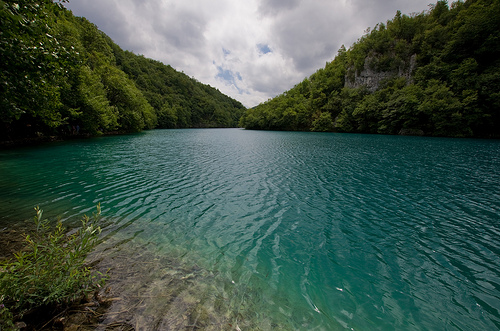
Plitvice Lakes National Park, Green, Water, Limestone, Calcium Carbonate, Blue, Aqua, Clouds, Croatia, Ten Random Facts, Flickr
A Plitvice Lake
Image courtesy of Grant Bishop/Flickr
  • Plitvice Lakes National Park has over 320 types of butterflies and moths, and 150 bird species including the eagle owl and the white-throated dipper.
  • ‘Plitvice Lakes National Park’ in Croatian is known as ‘Nacionalni Park Plitvička Jezera’, and the origin of the name ‘Plitvice’, most likely comes from the river called ‘Plitvica’, that flows into the lakes, while the Croatian words ‘plitko’, ‘plitvak’ and ‘pličina’ all mean ‘shallow’.
  • Plitvice Lakes National Park has forests of fir, beech, and spruce trees, and is the home to over 1260 species of plants, with more than 70 that are endemic to the area.
  • The Croatian War of Independence broke out in 1991 in the Plitvice Lakes National Park and lasted until 1995, causing the park to be endangered until 1998 and during this period it was successfully cleaned of land mines, although many buildings in the area were destroyed during the war.
  • The symbolic logo of Plitvice Lakes National Park is the European brown bear, which can be found in the park, along with 50 other mammal species, like deer, pine martens, hedgehogs, lynx, otters, and wolves.
Bibliography:
Bryan K, The history and little known facts behind Plitvice Lakes National Park, Croatia, n.d, Europe A La Carte, http://www.europealacarte.co.uk/blog/2010/05/03/the-history-and-little-known-facts-behind-plitvice-lakes-national-park-croatia/
 The Plitvice Lakes National Park, 2014, Nacionalni Park Plitvička Jezerahttp://np-plitvicka-jezera.hr/en/
Plitvice Lakes National Park, 2014, Wikipedia, http://en.wikipedia.org/wiki/Plitvice_Lakes_National_Park

Amazon:      

Rainbow Trout

Rainbow Trout

No, rainbow trout do not cause rainbows.

  • Rainbow trout are fish native to North American and north east Asian areas of the Pacific Ocean, and are also native to cold, North American lakes and rivers.
  • ‘ Rainbow trout’ are also known as ‘steelheads’, ‘steelhead trout’, ‘redband trout’ and ‘ocean trout’.
  • Rainbow trout adults have a typical length between 51 to 76 cm (20 to 30 inches) and depending on their habitat, they can weigh between 0.5 to 9.1 kilograms (1 to 20 pounds).
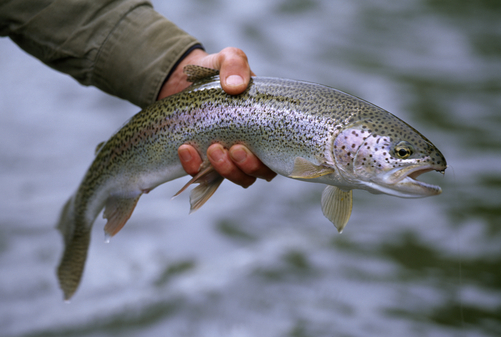
  • Rainbow trout have a red stripe from the tail to the head, and have a silvery, grey or brown skin colour and have numerous small dark coloured spots.
  • Rainbow trout have been introduced into every continent except Antarctica, and as a result, have decreased native fish population in many countries.

Rainbow Trout, Hold, Fish, Fisherman, Silver, Caught, Ten Random Facts, Alaska, United States, National Geographic

Rainbow Trout
Image courtesy of National Geographic
  • Rainbow trout, or steelhead trout as they are called in the United State’s Washington, became an official symbol of the state of Washington in 1969.
  • Rainbow trout has the scientific name Oncorhynchus mykiss and is from the family Salmonidae, the family of ray-finned fish, that migrate to fresh water to spawn, and either return to the ocean or further down stream after reproducing.
  • Rainbow trout can live to be 11 years, but their typical lifespan ranges from 4 to 6 years in the wild, and they always breed at the same place they were born.
  • Rainbow trout has a diet of crustaceans, small fish, water insects and fish eggs is popularly hunted for sport, food and bait.
  • Rainbow trout can be cooked and are easily eaten, while having a nut-like taste, and are commonly farmed commercially, with 604, 695 tonnes (666,562 tons) produced in 2007, with Chile being the largest producer.
Bibliography:
Rainbow trout, 2014, National Geographic, http://animals.nationalgeographic.com.au/animals/fish/rainbow-trout/
Rainbow trout, 2014, Wikipedia, http://en.wikipedia.org/wiki/Rainbow_trout

Amazon:     

Rubber Band

Rubber Band

Do not stretch the rubber band or it will… SNAP… too late.

  • Rubber bands are typically circular bands that stretch and are generally used to hold groups of items as one, or holding items in position.
  • It is said that the biggest consumer of rubber bands on earth is the US Postal Service that use them to sort and group mail, and they are also used in the floral industry and newspaper delivery services, and for holding other items together, like cut asparagus and other food stalks; pens and pencils and decks of cards.
  • ‘Rubber bands’ are also known as ‘elastic bands’, ‘lackey bands’, ‘laggy bands’, ‘binders’, and ‘elastic’.
  • Modern rubber bands were invented by the Englishman Stephen Perry, a businessman and inventor, that were patented on 17 March, 1845 in England.
  • Rubber bands are made from natural rubber (latex) or synthetic rubber, although they are generally manufactured with natural rubber due to the increased elasticity in this product.

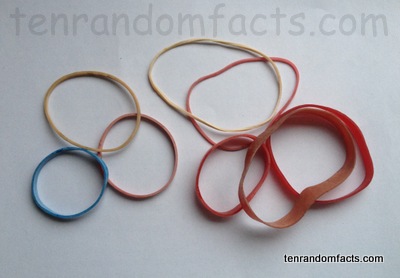
Rubber band. elastic, small, assorted, blue, red, thick, large, brown, tan , yellow, Ten Random Facts

  • Rubber bands release heat energy when stretched, but absorb heat energy when retracted.
  • Rubber bands are found in many different sizes, shapes, colours and stretchiness, and can be larger than 43 cm (17 inches) or as small as 3 mm (1/8 inch), although they typically range from 3 to 18 centimetres (1.25 to 7 inches) in length.
  • In Britain, the use of rubber bands by the Britain’s Royal Mail postal service has caused significant media attention in the country, due to the large quantity of elastic bands found discarded on the ground everyday, so much so, that at one stage they changed the bands from brown, to red, to make them more visible, and therefore more likely to be picked up by postal workers.
  • Rubber bands are created by heating a mixture of rubber, sulfur and other chemicals into strips, that are then extruded into tubes, cured and cut into bands.
  • Rubber strips, similar to rubber bands, were first historically made by the Maya people, Aztecs and other Mesoamericans thousands of years ago.


Bibliography:
Roux G, The Birth of the Humble Rubber Band, 2013, Sciencelens, http://sciencelens.co.nz/2013/03/17/rubber-band/
Rubber band, 2014, Wikipedia, http://en.wikipedia.org/wiki/Rubber_band
Berlow L H, Rubber Band, 2014, How Products are Made, http://www.madehow.com/Volume-1/Rubber-Band.html

Amazon:    

Poppy Seed

Poppy Seed

Do not eat your poppy seed bagel before a drug test.

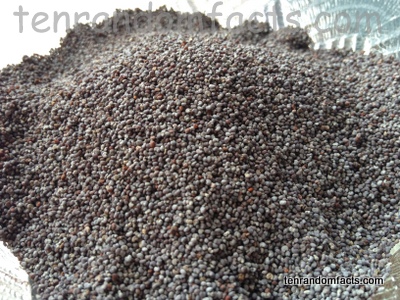
  • Poppy seeds are small seeds of Papaver somniferum, the opium poppy, used primarily in cooking.
  • Poppy seeds are a kidney shape, and have a length of around 1 millimetre.
  • Poppy seeds have been historically used in medicine and there have been superstitions associated with the seeds, like turning oneself invisible.
  • A gram of poppy seeds is approximately 3,300 seeds, and an ounce of the seeds is approximately 93,500 seeds.
  • In 2011, Turkey was the leader in poppy seed production, with 45,077 tonnes (49,689 tons) in 2011, of the world production of 106,419 tonnes (117,307 tons).

Poppy seeds, many, lots, black, grey, white, bowl, Ten Random Facts, whole spice

  • Poppy seeds are used as a paste, oil, thickener, spice and decoration, particularly in baked items, although they are used in other dishes.
  • Consumption of poppy seeds can cause drug tests to be false positive due to the content of opium alkaloids, that are also present in the illegal drug opium.
  • Selling, eating or holding poppy seeds in some countries, such as Saudi Arabia and Singapore, will result in punishments or arrests.
  • Poppy seeds have a flavour of nuts and are typically blue-black in colour, although white or grey poppy seeds are sometimes used.
  • Poppy seeds are a good source of manganese and calcium, and rarely cause allergies among people.
Bibliography:
Poppy seed, 2010, Olde Thompson, http://www.oldethompson.com/spice-details.aspx?SpiceID=27
Poppy seed, 2014, Wikipedia, http://en.wikipedia.org/wiki/Poppy_seed

Amazon:      

E.T. the Extra-Terrestrial

E.T. the Extra-Terrestrial

“E.T. phone home.” – E.T. from E.T. the Extra-Terrestrial

  • E.T. the Extra-Terrestrial is a Steven Spielberg science fiction film produced by Amblin Entertainment, directed by Steven Spielberg, written by Melissa Mathison, and distributed by Universal Pictures.
  • E.T. the Extra-Terrestrial‘ is commonly called ‘E.T.’ and, during production it was known as ‘A Boy’s Life’ to protect it from being copied.
  • E.T. the Extra-Terrestrial  is about a lone boy, Elliot, who helps an extraterrestrial, E.T., return home while evading the government.
  • E.T. the Extra-Terrestrial is based on the memories and feelings Spielberg had after the divorce of his parents, as well as parts of the unproduced film Night Skies.
  • E.T. the Extra-Terrestrial was a blockbuster film, earning a world total of over $700 million at the box office during its initial release, and was the highest grossing film ever, remaining in that position for ten years, after its release on 11th June, 1982.
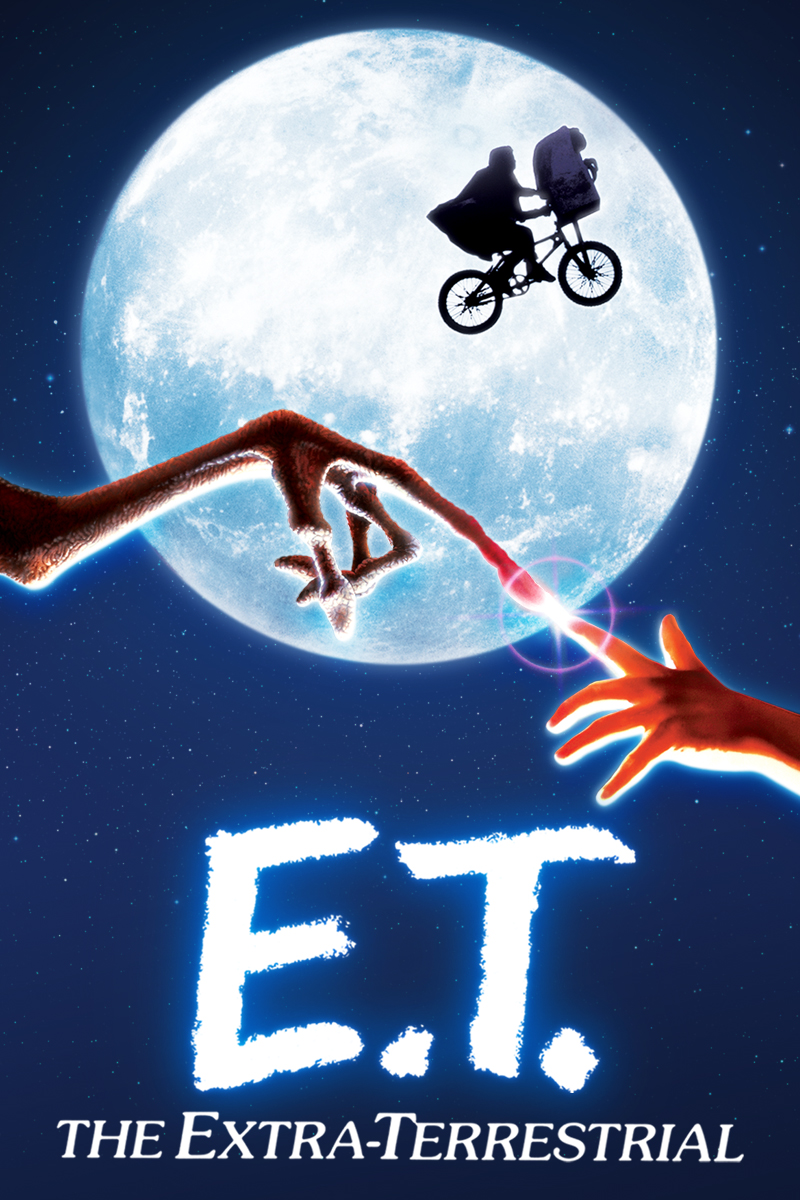
E.T. The Extra Terrestrial, Cover, Film, Spielberg, Alien, Moon, Recent, Ten Random Facts, Universal,
Film cover
Image courtesy of Universal Studios
  • The four main characters of E.T. the Extra-Terrestrial were acted by Henry Thomas, Robert MacNaughton, Drew Barrymore and Dee Wallace, making up the family in the film.
  • Four E.T. puppet heads for E.T. the Extra-Terrestrial were made, as well as a costume and other parts for the character, costing $1.5 million, with E.T. being played by three different people – two dwarfs and a legless boy.
  • E.T. the Extra-Terrestrial was re-released in 1985, and then in 2002 for the film’s 20th anniversary, screening at cinemas, and the 2002 version had some added and adjusted scenes.
  • E.T. the Extra-Terrestrial had a budget of $10.5 million, is listed among the best films of all time and won four Oscars of the nominated nine Academy Awards, two Golden Globe Awards, and a number of other awards.
  • A sequel film was planned for E.T. the Extra-Terrestrial called E.T. II: Nocturnal Fears, however the idea was shelved, although E.T was made into an Atari video game that was a major flop and was dubbed ‘the worst game of all time’, and a book adaption with a sequel was also created.
Bibliography:
E.T. the Extra-Terrestrial, 2014, Wikipedia, http://en.wikipedia.org/wiki/E.T._the_Extra-Terrestrial


Amazon:     

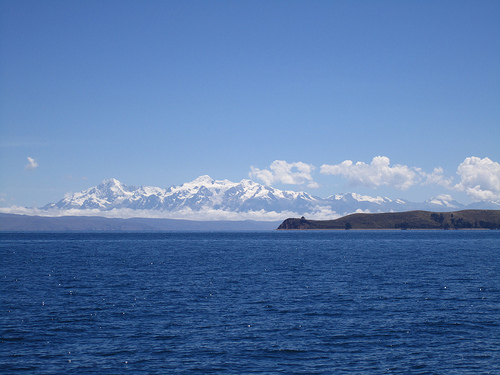
Lake Titicaca

Lake Titicaca

Lake Titicaca is the home of islands of reeds.

  • Lake Titicaca is a mountain lake that sits in the Tinajani Basin located in South America, along Bolivia’s and Peru’s borders.
  • ‘Lake Titicaca’ is also known as ‘Lake Titiqaqa’, and ‘titicaca’ is commonly believed to have the meaning ‘rock of the puma’, although the origin of the name is uncertain.
  • Lake Titicaca has more water than any other lake in South America, and is the highest lake in the world that can be crossed by ships.
  • The surface of Lake Titicaca is 3,812 metres (12,507 feet) above sea level.
  • Lake Titicaca is 8,372 square kilometres (3,232.4 square miles) in area and has a depth of up to 281 metres (922 feet).
Lake titicaca, blue, lake, large, water, Ten Random Facts, Flickr
Lake Titicaca
Image courtesy of Alicia Nijdam/Flickr
  • Lake Titicaca is sourced by 5 major rivers and 22 minor water sources, in turn typically sourced by glaciers, and the lake sources Desaguadero River.
  • Lake Titicaca is the home to many water birds, fish and other aquatic species, including the exclusive Titicaca water frog and the Titicaca grebe.
  • Lake Titicaca is the home of multiple habitable and inhabitable islands, some of which are made of reeds that float and are home to the Uru people.
  • Lake Titicaca has a temperature averaging 10 to 14°C (50 to 57°F) on the surface.
  • Lake Titicaca, according to Incan legend, was the birth place of Manco Cápac, the first Incan king, and for this reason the lake is considered sacred and attracts thousands of visitors every year.
Bibliography:
Lake Titicaca, 2008, Lake Titicaca, http://www.laketiticaca.org/
Lake Titicaca, 2014, Wikipedia, http://en.wikipedia.org/wiki/Lake_Titicaca

Amazon:      

Related Posts Plugin for WordPress, Blogger...