Cork Stopper

Cork Stopper

With cork stoppers, you will not spoil your wine.

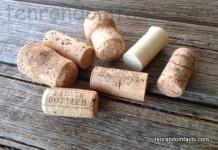
  • Cork stoppers are generally small cylinders that are placed in the top of containers to block and seal in the contents.
  • ‘Cork stoppers’ are also known as ‘corks’, ‘stoppers’ and ‘bungs’, and are typically made of cork, but stoppers can also be made of rubber, metal, glass or silicone, depending on their use.
  • Cork stoppers are most often used to seal bottles, particularly those containing wine, and are occasionally used to seal barrels or tubes.
  • Cork stoppers are generally manufactured from the outer bark of the cork oak tree, that has the scientific name Quercus suber, and whole corks are usually cut from the bark, although cheaper corks are manufactured from amassed cork particles and are known as ‘agglomerated corks’.
  • Cork stoppers were used in wine bottles as early as the first century BC, in Ancient Greece in Ephesus, located in today’s Europe.
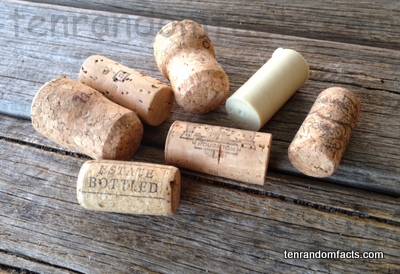
Cork Stopper, Many, Patterned, Brown, Wine, Bung, Ten Random Facts

  • Cork stoppers are environmentally friendly, stable, water resistant, compressible, flexible and are able to seal liquid and gas in the container, and these properties are almost impossible to replicate in the cheaper man-made stoppers or screw caps that are sometimes used for similar purposes.
  • The first machine to make cork stoppers was invented in the 1800s in the United Kingdom, Europe.
  • Europe’s Portugal, is one of the largest producers of cork stoppers in the world, and in 2002, 13 billion corks were produced throughout the world, 8% of which were synthetic.
  • A corkscrew is often required to remove and properly install cork stoppers, and their use was documented in 1681.
  • Cork stoppers are recyclable, and can be made into shoes and apparel, sporting equipment, incorporated into aircraft and building designs, as well as various other forms.
  • Bibliography:
Bung, 2014, Wikipedia, http://en.wikipedia.org/wiki/Bung
Corks – Past, Present, and Future, n.d, Beekman Wine and Liquors, http://www.beekmanwine.com/prevtopap.htm
Cork, 2011, Cork Forest Conservation Alliance, http://www.corkforest.org/history_of_cork.php
Amorim, n.d, Amorim Cork, http://www.amorimcork.com/en/natural-cork/recycling

Amazon:      

Hitachi Seaside Park

Hitachi Seaside Park

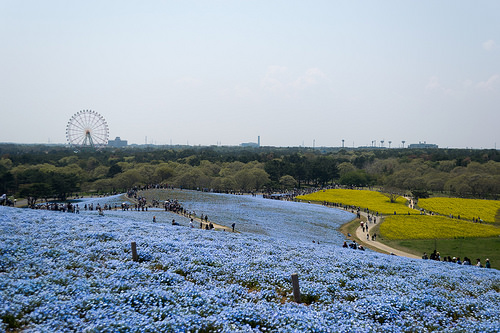
Hitachi Seaside Park is a park of wonder.

  • Hitachi Seaside Park is a park located on the coast of Japan’s largest island, Honshu, in the city of Hitachinaka, in the Ibaraki Prefecture.
  • ‘Hitachi Seaside Park’ is known as ‘Kokuei Hitachi Kaihinkōen’ in Japanese.
  • Hitachi Seaside Park comprises of approximately 190 hectares (470 acres) of area, that includes a hill, forests, garden, entertainment area and other features.
  • Hitachi Seaside Park notably contains 4.5 million blue nemophila plants, 1 million daffodils and 170 different varieties of tulip, as well as many other flowering plants and vegetation.
  • Hitachi Seaside Park features a Ferris wheel that is a good way to gain great views of the park, as well as a rollercoaster, golf area, a labyrinth, a water playground and more.
Hitachi Seaside Park, Flowers, Blue, Blooming, Ferris Wheel, Japan, Garden, Public, Ten Random Facts, Flickr
Hitachi Seaside Park
Image courtesy of Temaki/Flickr
  • Hitachi Seaside Park is the venue for the Rock in Japan Festival, the largest rock genre music festival in Japan, that is held each year in August.
  • Hitachi Seaside Park has entrance and parking fees, and pets on leashes are welcome, although they are restricted in some areas.
  • Hitachi Seaside Park contains numerous cycling tracks, public paths and recreation areas.
  • Although flowering occurs all year, the majority of flowers in Hitachi Seaside Park bloom in spring, notably the nemophilas, which led to the name ‘Nemophila Harmony’ for this period.
  • Since the Fukishima nuclear disaster of 2011, some areas of Hitachi Seaside Park have been closed at various times due to rising radiation levels, however, the levels are closely monitored and decontamination has occurred when necessary.
Bibliography:
Flower Paradise at Hitachi Seaside Park, Japan, 2012, Amusing Planet, http://www.amusingplanet.com/2012/06/flower-paradise-at-hitachi-seaside-park.html
Hitachi Seaside Park, 2013, Visit Ibaraki Japan, http://visitibaraki.net/hitachi-seaside-park-post.html
Hitachi Seaside Park, 2014, Wikipedia, http://en.wikipedia.org/wiki/Hitachi_Seaside_Park
Menu, 2014, Hitachi Seaside Park, http://hitachikaihin.go.jp/

Amazon:     

Multiple Sclerosis

Multiple Sclerosis

Multiple Sclerosis is an unavoidable and often invisible disease.

  • Multiple sclerosis is a progressive disease that can affect the spinal cord, optic nerves and brain, brought about by lesions or scars from inflammation in those areas.
  • The actual cause of multiple sclerosis is not known at this stage, but it is possibly caused by a virus or bacterial agent combined with a genetic tendency that causes immune problems, and smoking is said to increase the risk.
  • Multiple sclerosis damage most likely occurs from the body’s immune cells attacking parts of the central nerve system.
  • ‘Multiple sclerosis’ is also known as ‘MS’, ‘disseminated sclerosis’ and ‘encephalomyelitis disseminata’, and ‘sclerosis’ comes from the Greek word ‘skleros’ meaning ‘hard’.
  • Those with multiple sclerosis typically have a few symptoms, but not generally numerous, that vary from person to person, and can including fatigue, eye problems, coordination issues, pain, speaking difficulties and malfunctioning sensations.
Multiple Sclerosis, Ill, Disease, Wheelchair, Black and White, Sad, Disability, Ten Random Facts, Flickr
People affected by Multiple Sclerosis Image courtesy of Dominik Golenia/Flickr
  • There are four different types of multiple sclerosis, from most common to rarest, relapsing-remitting, primary-progressive, secondary-progressive (this has become less common due to new medications) and progressive-relapsing.
  • Women are more than two times more likely to be affected by multiple sclerosis than men, while people of European descent are also more susceptible.
  • There were roughly 2.5 million people in the world with multiple sclerosis in 2010, with the number of new cases rising by 4% annually.
  • Multiple Sclerosis doesn’t have a known cure, although there are some medications and therapies that can stall symptoms of the disease.
  • Multiple Sclerosis was first detailed as a disease by French Jean-Martin Charcot, a neurologist, in 1868.
Bibliography: Multiple Sclerosis, 2014, Wikipedia, http://en.wikipedia.org/wiki/Multiple_sclerosis

What is MS?, 2014, MS Queensland, http://msqld.org.au/about-ms/what-is-ms

Choko

Choko

Do not choke on these choko facts.

  • A choko is the fruit of a vine with the scientific name Sechium edule, that is a perennial and grows vigorously.
  • ‘Chokos’ are also known by eighteen other names, including ‘cho-cho’, ‘pear squash’, ‘mirliton’, ‘chayote’, ‘vegetable pear’ and ‘christophine’.
  • Chokos are native to Mexico, in southern North America, and they were later grown in Europe, other parts of America and Australasia.
  • Chokos are from the family Cucurbitaceae, the family of gourds, and the fruit of the plant, as well as the leaves, roots and seeds are edible.
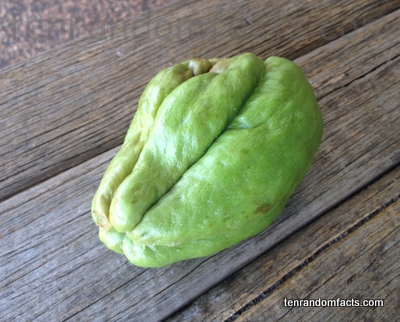
  • Chokos are typically shaped as a pear with significant ridges and are a mid to light green colour.

Choko, Green, Gourd, Vegetable, Australian, Wrinkled, Ten Random Facts, Chayote

  • Chokos have a length ranging from 10 to 20 centimetres (4 to 8 inches) and are usually used as a vegetable and peeled before cooking.
  • Chokos are most often cooked, although they can be eaten raw, and are typically used in stir-fry, relish, soup, salads, seasoned or as side vegetables, and can also be used in baked goods.
  • It has been commonly suggested that the apple pies of Australia’s McDonald’s fast food outlets contain chokos, however, this is incorrect.
  • Chokos are high in folate and are a good source of vitamin C and manganese.
  • Chokos can positively affect the cardiovascular system and limit inflammation, while the leaves can be made into a tea for medicinal purposes.
Bibliography:

Chayote, 2014, Wikipedia, http://en.wikipedia.org/wiki/Chayote
Choko, 2014, Burke’s Backyard, http://www.burkesbackyard.com.au/2001/archives/2001_archives?p=1320

Amazon:      

Dormouse

Dormouse

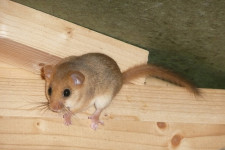
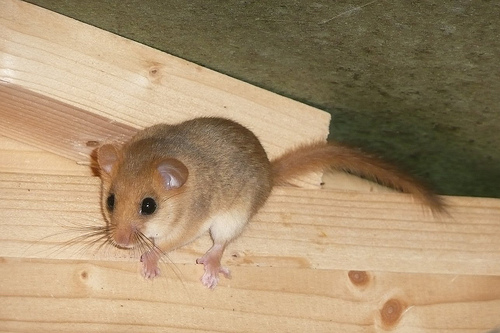
The dormouse is very cute.

  • Dormice are small, furry mammals that are native to Europe and parts of Asia and Africa.
  • The dormouse has the scientific and family name Gliridae, that has also been known as Myoxidae and Muscadinidae, and includes 29 species.
  • Dormice can grow to be 6 to 19 centimetres (2.4 to 7.5 inches) in length, in addition to their long tail, and they can be 15 to 180 grams (0.5 to 6.35 ounces) in weight.
  • Dormice are rodents that are a similar shape to a mouse, although they have a furry tail.
  • Dormice have diets that mainly consist of vegetation, including fruit, nuts and flowers, along with insects, and they have many predators that include birds and mammals like cats, foxes and weasels.
Dormouse, Mouse, Rodent, Ten Random Facts, Animal, Flickr, Household, Wood, Stare
Dormouse
Image courtesy of Moscardino/Flickr
  • Dormice have a life span of up to five years, and females have litters one or two times a year, and on average have four mice per litter.
  • Doormice are mostly nocturnal, live in small groups mostly among trees and are good climbers.
  • The word ‘dormouse’ possibly comes from the term ‘dormeus’ or ‘dormir’, an Anglo-French word meaning ‘sleepy’, and the animal does have notably extended hibernation periods that can last longer than six months.
  • Dormice have been eaten historically by the Ancient Romans, as well as today by some cultures.
  • The fur of a dormouse can range from brown, tan, gold, white, grey or black in colour, and their whiskers are black.
Bibliography:
Dormouse, 2014, A-Z Animals, http://a-z-animals.com/animals/dormouse/
Dormouse, 2014, Wikipedia, http://en.wikipedia.org/wiki/Dormouse


Amazon:   

Cherry Ripe Chocolate Bar

Cherry Ripe Chocolate Bar

“The Big Cherry Taste” – the slogan of Cherry Ripe.

  • Cherry Ripe is a rectangular chocolate bar that is an original Australian product.
  • Cherry Ripe bars are manufactured by Cadbury Australia and New Zealand.
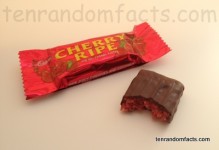
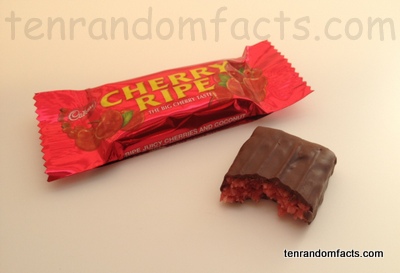
  • Cherry Ripe bars consists of a coconut and cherry filling mix that is covered with a unique dark chocolate blend called ‘Old Gold’.
  • Cherry Ripes were invented in 1924 by MacRobertson’s Steam Confectionery Works, that was founded by Sir Macpherson Robertson.
  • Cherry Ripes are the oldest chocolate bars to be manufactured in Australia.

Cherry Ripe, Packet, Bar, Mini, Cadbury, Chocolate, Inside, Dark chocolate, Ten Random Facts, Delicious, Australia

  • According to a survey conducted by Roy Morgan Research, Cherry Ripe was Australia’s most popular chocolate bar in 2012 to 2013, with 10% of the population consuming one in a typical four week period.
  • The original MacRobertson’s Cherry Ripe logo was used on the wrapper until 2002, when it was redesigned.
  • Cherry Ripes comes in sizes of 18 grams (0.6 ounces), 52 grams (1.8 ounces), 80 grams (2.8 ounces) and 216 grams (7.6 ounces).
  • Cherry Ripe bars have a flavour of sweetness and a soft texture, and can be used as a dessert ingredient, to make mud cake, cheesecake or brownies.
  • A homemade slice of the same name, that mimics the flavour and texture of Cherry Ripe bars is popular and can be made using readily available ingredients.


Bibliography:
Cadbury Cherry Ripe, 2010, Candyblog, http://www.candyblog.net/blog/item/cadbury_cherry_ripe
Cherry Ripe, 2014, Cadbury, https://www.cadbury.com.au/Products/Chocolate-Bars/Cherry-Ripe-Bar.aspx
Cherry Ripe, 2014, Real Australian Travel, http://www.realaustraliatravel.com/cherry-ripe.html
Cherry Ripe (Chocolate Bar), 2014, Wikipedia, http://en.wikipedia.org/wiki/Cherry_Ripe_(chocolate_bar)

Amazon:        

Related Posts Plugin for WordPress, Blogger...