Doughnut

Doughnut

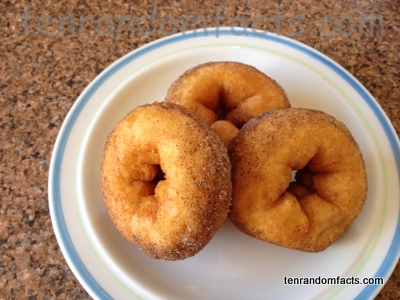
Doughnuts are delicious delicacies.

  • Doughnuts are also known as ‘donuts’, and are edible food items that are flour based and are traditionally a round shape.
  • Doughnuts can be made from a cake-style dough, or a yeast-like dough, and are typically eaten as a dessert or sweet food, often as a snack.
  • Doughnuts are primarily made of a deep fried dough mixture that typically uses wheat flour and a combination of other ingredients, like eggs, milk, sugar, oil, and sometimes yeast.
  • Doughnuts often contain up to 20 to 25% oil, and are typically covered with a sweet flavouring such as icing or glaze, chocolate, syrup, or sugar that sometimes has cinnamon added.
  • Doughnuts are most often disc shaped, with or without a hole, although shapes can vary, and the hole is said to have been introduced so that the doughnuts cook more evenly and one is not left with a doughy centre.
Doughnut,  Donut, Wheat, Rings, Confectionery, Food, Ten Random Facts, Australia, Plate, Three, Some,

  • Doughnuts without holes often contain a filling such as custard, a sweet condiment like jam and/or cream, although sometimes a savoury filling is used.
  • The ‘holes’ of doughnuts, typically cut by a puncher, may be coated and sold commercially, however they are often made from small balls of dough to look like ‘holes’.
  • Fried dough mixtures similar to doughnuts originated in both Ancient American and Eurasian societies; while modern versions are often said to have been based on the Dutch ‘oliekoeken’ (oil cake).
  • The first known printed doughnut recipe is from 1803, and those with holes are often said to have been invented by American sailor or captain, Hanson Gregory in 1847, although there are various versions of the story, and the truth of the matter is not known.
  • America’s Canada is the largest doughnut consumer in the world, and they have the most commercial outlets for the snack, per person.

Bibliography:

Chavey E, Doughnuts: A definitive history, 2014, Mr Breakfast, http://www.mrbreakfast.com/article.asp?articleid=8
Doughnut, 2014, Wikipedia, http://en.wikipedia.org/wiki/Doughnut
The History of Doughnuts, 2011, Toriavey, http://toriavey.com/history-kitchen/2011/06/the-history-of-doughnuts/

Amazon:        

Earmuffs

Earmuffs

Earmuffs: protect your ears from noise and cold.

  • Earmuffs are a piece of equipment or clothing accessory, that covers the ears, that are used for either thermal or acoustic purposes.
  • Earmuffs typically come as a pair of ear shields, pads or cups, connected by a curved strip that is usually made of metal or thermoplastic.
  • ‘Earmuffs’ are also known as ‘ear protectors’ and ‘ear-mufflers’, and those used for acoustic purposes are also known as ‘ear defenders’ and ‘hearing protectors’ and are classified as ‘personal protective equipment’ (PPE).
  • Thermal earmuffs are used to keep one’s ears warm, and are commonly used outdoors in cold climates.
  • Depending on their designed use, earmuff pads are commonly made of fabric, foam or thermoplastic, or a combination of these materials.

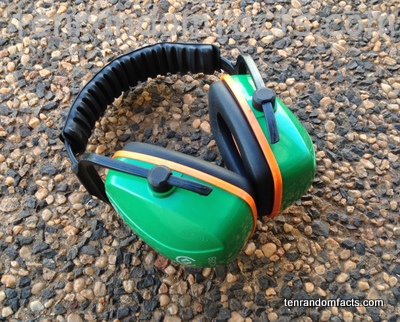
Earmuffs, Green, Acoustic, Sound, Protector, Invention, Ten Random Facts

  • When sounds are too loud, acoustic earmuffs are used to protect the ears, and they should be used when sounds breach 85 decibels.
  • Thermal earmuffs were invented in 1873 by American teenager Chester Greenwood, resident of Farmington in Maine in the United States, at 15 years of age, later receiving a patent for his improved invention in 1877, and by 1883 his company produced 30,000 a year and by 1936, 400,000 were being produced annually.
  • Earmuffs are usually placed on top or around the back of a person’s head, like a headband.
  • Acoustic earmuffs have different ratings, depending on the level of noise reduction they have when in use.
  • Earmuffs come in a variety of colours and the pads come in a variety of shapes depending on their purpose and fashion.


Bibliography:
Earmuffs, 2014, Wikipedia, http://en.wikipedia.org/wiki/Earmuffs
Earmuffs 2005, The Great Idea Finder, http://www.ideafinder.com/history/inventions/earmuff.htm

Amazon:       

Antelope Canyon

Antelope Canyon

Antelope Canyon is full of picturesque rock formations, but no antelopes.

  • Antelope Canyon is primarily a water eroded rock canyon located near the city of Page, in the northern part of the state of Arizona, in the United States.
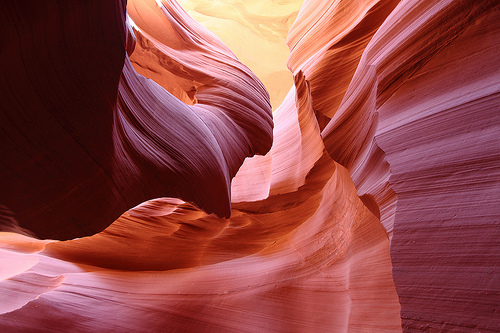
  • Antelope Canyon is a slot canyon known for its smooth, wavy walls of sandstone, caused mainly by flash flooding and rain.
  • Antelope Canyon is a popular tourist location, particularly for photography and sightseeing, and is said to be the most photographed slot canyon in the world.
  • Antelope Canyon has two parts, an upper and a lower section, called ‘the Crack’ and ‘the Corkscrew’ respectively, and the Upper Canyon is easily accessible and relatively flat, whereas the Lower Canyon requires significant quantities of stairs to access the site.
  • The area surrounding Antelope Canyon has historically been used as a site for livestock grazing and the area is part of the Lake Powell Navajo Tribal Park.

Antelope Canyon, Picturesque, Amazing, Light, Red, Sandstone, Ten Random Facts, Flickr, Arizona, USA, United States of America

Lower Antelope Canyon
Image courtesy of James Chang/Flickr
  • Some curved parts of Antelope Canyon beautifully reflect light, and light beams can be seen in other canyon locations, especially in the Upper Canyon during summer.
  • Before European discovery, Antelope Canyon was the home to numerous pronghorn antelopes, hence its name, and the native Navajo people call the Upper Canyon ‘Tsé bighánílíní’, meaning ‘the place where water runs through rocks’ and the Lower Canyon ‘Hasdestwazí’, which means ‘spiral rock arches’.
  • Antelope Canyon is only accessible via a guided tour, and it has been open to commercial tours since 1987.
  • Flash flooding in Antelope Canyon is still common, causing 11 fatalities in 1997, and death prevention measures are now in place, including radios and loud alarms.
  • The distance between Antelope Canyon’s walls range from 1-3 metres (3.2 to 9.8 feet) wide and run up to 50 metres (6.5 to 164 feet) deep, and the Upper Canyon sits 1219 metres (4000 feet) above sea level and the walls are 36.5 metres (120 feet) tall.
Bibliography:
Antelope Canyon, 2014, Wikipedia, http://en.wikipedia.org/wiki/Antelope_Canyon
Leco M, Antelope Canyon, Arizona, n.d, USA Tourists, http://www.usatourist.com/english/destinations/arizona/antelopecanyon/antelope-canyon-main.html
Travel Navajo Nation, n.d, Navajo -Nation Parks and Recreation, http://www.navajonationparks.org/htm/antelopecanyon.htm

Amazon:       

Okapi

Okapi

Okapis are weird and wonderful creatures.

  • Okapis are solitary mammals that are endemic to central Africa, in the Democratic Republic of the Congo’s rainforest habitats, and they are a prominent symbol of the country.
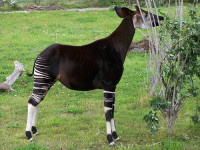
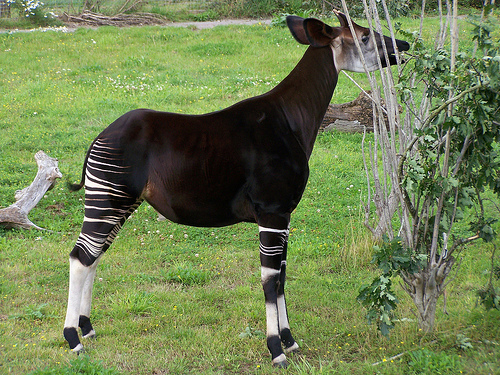
  • Okapis have fur coloured red to brown, and the legs are striped black and white like a zebra.
  • ‘Okapis’ are also known as ‘forest giraffes’ and ‘zebra giraffes’, and have the scientific name Okapia johnstoni.
  • Okapis are one of two living species from the family Giraffidae, the family of giraffes, and they have a longer neck than other similar shaped animals, and the males have short horns that look similar to those of a giraffe.
  • An okapi has a long tongue that can be up to 45 centimetre (18 inches) long, that is used for face cleaning and grabbing vegetation.
Okapi, Zoo, Mammal, Marwel, 2008, Ten Random Facts, Giraffe, Fossil, Unique, Endangered, Flickr
Okapi
Image courtesy of David/Flickr
  • Okapis range from 1.5 to 2 metres (4.9 to 6.6 feet) in height and 200 to 350 kilograms (440 to 770 pounds) in weight.
  • Okapis are shy creatures that live in remote areas, and are rarely seen in the wild by humans, and they have a lifespan of around 20 to 30 years.
  • Okapis eat only vegetation, including leaves, fruit, fungus and grass, although they also consume red coloured clay for its mineral and salt content.
  • Okapis are a protected species, and due to dwindling numbers by poaching and habitat loss, in 2013 they were classified as endangered.
  • Around 175 okapis can be found in captivity in zoos across the globe, some of which are involved in their conservation.
Bibliography:
Okapi, 2014, A-Z Animals, http://a-z-animals.com/animals/okapi/
Okapi, 2014, Wikipedia, http://en.wikipedia.org/wiki/Okapi

Amazon:     

Sorbet

Sorbet

Sorbet is a simple but exquisite dessert.

  • Sorbet is a culinary dish often made and eaten as a dessert, and it is commonly used as a palate cleanser between courses, particularly in France.
  • Sorbet is typically made of sugar, ice and a flavouring, such as juice or puréed fruit or vegetables, or alcohol.
  • ‘Sorbet’ is also known as ‘sherbet’, although the two are notably different desserts, with the latter usually containing dairy.
  • The origin of sorbet is uncertain, however it likely originated from a cold dessert made from snow that Ancient Romans consumed in the first century, or a similar dessert from Asia.
  • Sorbet is often used as a low-fat and dairy-free replacement to ice-cream.

Sorbet, Mango, Weis, Gourmet, Tub, White, orange, Ten Random Facts, Frozen Dessert, Australia, Culinary

  • ‘Sorbet’ is possibly influenced by the term ‘sorbire’ or ‘sorbere’, meaning to ‘eat and drink simultaneously’ in either Italian or Latin respectively, and likely comes from the Turkish word ‘serbet’.
  • Sorbet, although often sweet, can be piquant, and flavours like tomato, celery, beetroot, pea, and capsicum are not uncommon.
  • Sorbet has a fairly smooth, icy texture, that easily melts in your mouth.
  • Sorbet comes in a variety of colours, that usually reflects the flavouring ingredient that has been used.
  • Depending on the main flavouring ingredients, sorbet can contain significant to low quantities of carbohydrates, and very few or many vitamins and minerals.


Bibliography:
Sorbet History, 2009, Sorbet.com, http://www.sorbet.com/sorbethistory.html
Sorbet, 2010, ifood.tv, http://www.ifood.tv/network/sorbet
Sorbet, 2014, Wikipedia, http://en.wikipedia.org/wiki/Sorbet

Amazon:     

Mousetrap

Mousetrap

Snap goes the mousetrap.

  • Mousetraps, also known as ‘mouse traps’, are devices typically used to catch, and sometimes kill mice.
  • Mousetraps are generally placed inside human shelters to remove mice that cause a nuisance, often by eating human food supplies.
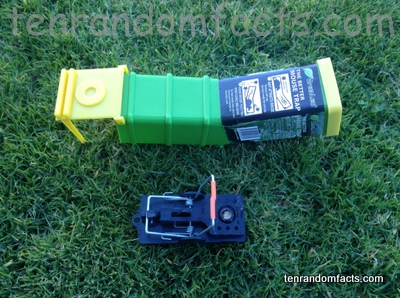
  • The classic mousetrap is typically rectangular, and catches mice by using a weight trigger and spring mechanism to set off a crushing bar.
  • The first deadly mousetrap said to be patented, was invented by New York resident American James Keep in 1879, although previous traps for mice existed, and earlier patents included traps that were not fatal.
  • The traditional spring triggered mousetraps were first patented by American William Hooker in 1894, and later in Britain in 1898 by James Atkinson, and John Mast from the United States improved Hooker’s invention in 1899, by making the trap safer to set.

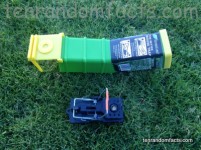
Mousetrap, Classic, Modern, Snap, Bait, Set, Tunnel, Alive, Ten Random Facts, invention, Flickr

  • Mousetrap bait options include cheese, peanut butter, bread, chocolate, oats or meat.
  • In addition to spring loaded traps, other mousetraps include devices that electrocute, drown or glue, although the latter generally are illegal under the animal cruelty act in some areas due to the slow death of the mouse.
  • There are a number of mousetraps that do not kill the mouse, often in the form of a cage, and simple ones can be made from household supplies.
  • Mousetraps are typically made of plastic, metal and/or wood, depending on the style of trap, and some are designed for single use, so that they can be easily disposed of with the mouse.
  • Disposal of a mouse caught in a non-fatal mousetrap can be tricky, especially if there is a desire to keep the mouse alive, as they have a natural instinct to return to their original dwelling, and are easily preyed upon in natural environments.
Bibliography:
Mouse Trap, 2014, Wikipedia, http://en.wikipedia.org/wiki/Mousetrap
Mouse Trap Exhibition, n.d, Dorking Museum and Heritage Centre, http://www.dorkingmuseum.org.uk/mousetrap-exhibition/

Amazon:      

Related Posts Plugin for WordPress, Blogger...