Yosemite Valley

Yosemite Valley

Yosemite Valley is a very scenic place.

  • Yosemite Valley is a valley located in the United State’s California, in the mountainous region of Yosemite National Park.
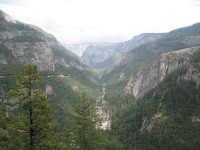
  • Yosemite Valley covers a length of approximately 13 kilometres (7.5 miles) and is about 1.6 kilometres (1 mile) wide and is surrounded by up to 1.46 km (0.9 mile) high granite cliffs.
  • Yosemite Valley features numerous walking tracks and rock climbs, and is a popular tourist destination, attracting approximately 2.8 million visitors per year in 2012.
  • Yosemite Valley is populated by pine trees, and is the home to numerous creeks, waterfalls and meadows.
  • Yosemite Valley is said to have been originally filled by numerous glaciers, which in turn flattened the valley floor, causing it to be a U-shaped glacial valley.
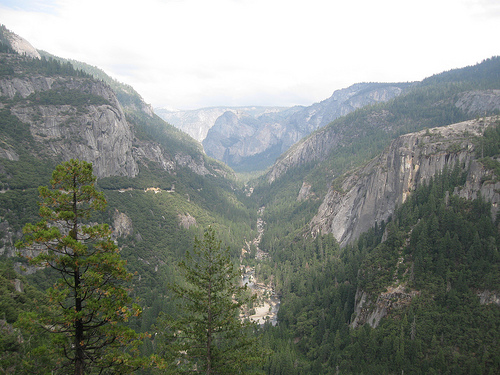
Yosemite Valley, Part of, Scenery, Clif, Trees, America, united States, California, Ten Random Facts, Flickr
Part of Yosemite Valley
Image courtesy of CJ Travel Tips/Flickr
  • Yosemite Valley is home to much wildlife – fauna including squirrels, deer, bears, coyotes, salamanders, skinks, bobcats and rattlesnakes; and flora including wildflowers and shrubs.
  • Besides rock climbing and hiking, Yosemite Valley offers many other activities, including ice skating in winter, fishing, cycling, birdwatching, and swimming.
  • In 1864, Yosemite Valley was declared a protected landmark, via a bill by Abraham Lincoln (president of the United States at the time), that made it the first protected natural place by a federal government, and it was declared a UNESCO World Heritage Site in 1984 as part of the Yosemite National Park listing.
  • Yosemite Valley has numerous rock falls each year, some of which have fallen from significant heights, caused fatalities, registered on seismographs, flattened thousands of trees, damaged buildings and caused huge dust clouds.
  • There is a fee to enter the national park that Yosemite Valley is located in, and the valley has lodges, cabins, camping areas, shops, a museum, post office, art centre and many other facilities.
Bibliography:
Cary R, Yosemite Valley, 2006, Yosemite National Park, http://www.yosemitehikes.com/yosemite-valley/yosemite-valley-hikes.htm
Yosemite Valley, 2014, Wikipedia, http://en.wikipedia.org/wiki/Yosemite_Valley

Amazon:     

Spider Monkey

Spider Monkey

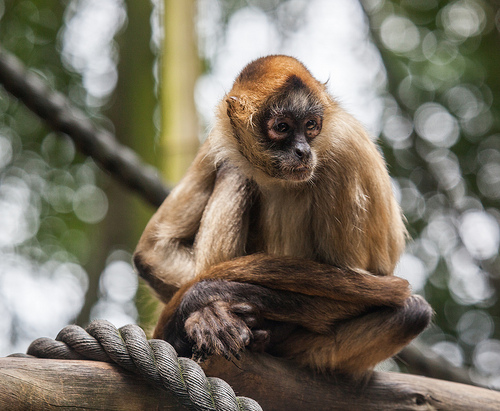
Eeek! Oh, it is just a spider monkey.

  • Spider monkeys are a group of monkeys, scientifically known as ‘Ateles’, that are native to Central and South America’s rainforests.
  • Spider monkeys have abnormally long arms, legs and tail, that somewhat resembles a spider, and they do not possess thumbs.
  • Spider monkeys’ diet mainly consists of fruit, as well as nuts, flowers, leaves, and insects.
  • Spider monkeys live high up in the tall trees, in troops of 10 to 40 monkeys, that generally split into smaller groups during daytime, and they vocalise by barking, screaming and whinnying.
  • Six of the seven species of spider monkey are endangered, some species critically, and the seventh is vulnerable, due to rainforest removal as well as hunting.
Spider Monkey, Brown, Crouch, Tree, Branches, Animal, Primate, Ten Random Facts, Flickr, Endangered, Long limbs,Spider Monkey
Image courtesy of Russel Street/Flickr
  • Spider monkeys are from the Atelidae family, the family of large New World Monkeys, and they have a life span, on average, of 22 years, and can live up to 27.
  • The fur of spider monkeys is typically coloured gold, brown, black, white or grey and the extremities are also black coloured, while the colour varies depending on the species.
  • When threatened, either by humans or other animals like eagles and jaguars, spider monkeys may bark, shake trees to provoke fear, drop branches or, rarely, attack.
  • Female spider monkeys typically have a single baby at a time, with a gap of 3 or 4 years before they reproduce again, and the young monkey travels with and relies on the mother for approximately six to ten months.
  • Spider monkeys grow to be around 35 to 66 centimetres (14 to 26 inches) in height, with a tail length that can be as long as 89 centimetres (35 inches), and they weigh approximately 6 to 11 kilograms (13.25 to 24 pounds).
Bibliography:
Spider Monkey, 2014, A-Z Animals, http://a-z-animals.com/animals/spider-monkey/
Spider Monkey, 2014, National Geographic, http://animals.nationalgeographic.com.au/animals/mammals/spider-monkey/
Spider Monkey, 2014, Wikipedia, http://en.wikipedia.org/wiki/Spider_monkey

Amazon:      

Camembert

Camembert

Do you prefer soft cheese, like camembert?

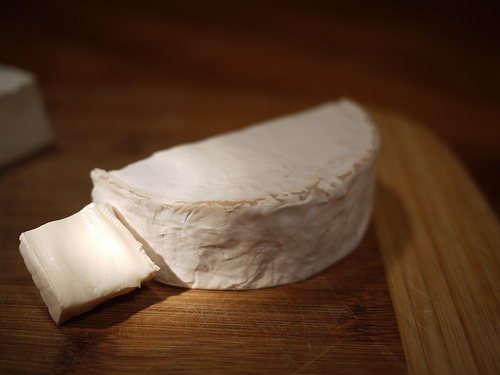
  • Camembert is a milk based, light yellow coloured cheese, that has a sweet taste, textures of creaminess and softness, and is typically shaped as a short cylinder.
  • Camembert is said to have been invented in a Normandy village of the same name, in Europe’s France, in the late 1700s by a French farmer named Marie Harel, and the cheese was a common addition to French military ration packs during World War I.
  • Camembert is traditionally made of unpasteurised milk, known as ‘Camembert de Normandie’, and those with French certification are still made this way.
  • The initial process for creating camembert is done by solidifying a mix of warm cow’s milk, rennet and mesophilic bacteria, and the curd is extracted and the whey is then removed.
  • Camembert curd is placed in a round form, and once all the whey has been removed, the cheese is sprayed with Penicillium camemberti fungus that has been dissolved in water and is left to ripen.
Camembert Cheese, White, Soft, Cut, Half, Plate, Ten Random Facts, FlickrCamembert
Image courtesy of Rebecca Siegel/Flickr
  • It is a requirement by law, that three weeks minimum must pass, to allow camembert to ripen and then be packaged, and the cheese is commonly covered by a thin paper wrap or two, before being packaged and transported.
  • The rind (mouldy layer) of camembert has generally been white since the 1970s, although historically it was a blue to grey colour, and was spotted brown.
  • Commercial camembert is typically 10 to 11.5 centimetres (4 to 4.5 inches) in diameter, 3.2 to 3.8 centimetres (1.25 to 1.5 inches) in height and weighs approximately 200 to 250 g (7 to 8.8 ounces).
  • Camembert is often confused with brie cheese, and while they are similar in texture and appearance, brie is usually much larger or sliced from a large wheel, ages slower, has a milder taste, and often uses a different substance to create the mouldy rind.
  • Camembert is very high in fat, sodium, riboflavin, protein, calcium and phospherous; is high in vitamin B12, selenium, zinc, folate and vitamin A; and also contains many other vitamins and minerals.
Bibliography:
Camembert, 2012, Cheese.com, http://www.cheese.com/camembert/
Camembert, 2014, Wikipedia, http://en.wikipedia.org/wiki/Camembert
Prabhat S, Difference Between Brie and Camembert, 2009, DiferenceBetween.net, http://www.differencebetween.net/object/comparisons-of-food-items/difference-between-brie-and-camembert/

Amazon:       

Toothpaste

Toothpaste

These toothpaste facts are very hygienic.

  • Toothpaste is a paste solution or powder used primarily to clean one’s teeth and gums.
  • Toothpaste contains plaque and food removing chemicals; helps stop most mouth diseases; and helps to freshen one’s breath.
  • Toothpaste typically cleans with a toothbrush aid, which spreads and rubs the paste.
  • Toothpaste has a water content of 2o% to 42%, and generally contains fluoride that aids in preventing tooth decay; abrasives that help to remove plaque; and surfactants or detergents that help to clean the teeth.
  • Toothpaste is commonly flavoured, often with peppermint, wintergreen or spearmint oil, although unflavoured versions are available, and toothpaste for sensitive teeth is also manufactured.

Colgate, Toothpaste, Three, Spiderman, Tubes, Gel, Ten Random Facts,

  • Ancient Egyptians are said to have used powdered toothpaste as early as 5000 BC, and Ancient Romans and Greeks enhanced this formula with the addition of abrasives.
  • The fluoride content in toothpaste can be poisonous if consumed in large amounts.
  • A combination of a variety of ingredients have been used throughout the centuries to clean teeth, including a resin called ‘dragon’s blood’, burnt eggshells, hooves of an ox, pumice, oyster shells, earthenware, burnt snail shells, cuttlefish, brick, charcoal, chalk, burnt bread and honey.
  • Modern style toothpaste is based on powders and pastes that were developed in the 1800s and early 1900s, that included the addition of fluoride, baking soda, soap and hydrogen peroxide.
  • It is recommended that toothpaste and a toothbrush are used to clean teeth at least twice a day for maximum effect.


Bibliography:
The History of Teeth Cleaning, 2011, h2g2, http://h2g2.com/edited_entry/A2818686
Toothpaste, 2014, Wikipedia, http://en.wikipedia.org/wiki/Toothpaste

Amazon:     

Li River

Li River

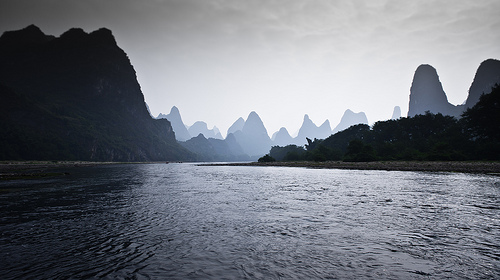
Scenic views are along Li River.

  • Li River is a green-blue coloured river located in Asia, in the Guangxi region in southern China, and is a popular tourist destination.
  • ‘Li River’ is also known as ‘Lijiang’, ‘Lí Jiāng’ and ‘Lijiang River’ and it is not linked to the city of Lijiang that is located in a different area in China.
  • Li River is formed in the Xing’an County in China, in the mountain of Mao’er Shan (Cat Mountain), and merges into the larger Gui River towards the south.
  • Li River combined with the Gui River is 437 kilometres (271.5 miles) long and it winds its way south, towards the South China Sea.
  • The most popular area for Li River cruises is along an 83 kilometre (51.6 mile) stretch, that starts in the city of Guilin and passes through the hilly Yangshuo County.
Li River, Scenic, China, Hills, Silhouette,  Asia, Ten Random Facts, Flickr, Amazing*
Part of Li River
Image courtesy of Oarranzli/Flickr
  • Li River has a historical man-made canal, the oldest of its type in the world, that connects the river to the Xiang River, and the canal has contributed to water conservation in the area.
  • Along Li River, picturesque, tall rocky hills can be seen, similar to those of Halong Bay in Southeast Asia’s Vietnam.
  • Tourists can hire a wide variety of boats along Li River, from small rafts to bigger crafts, and most cruises depart from Zhujiang Wharf, which is 40 minutes by car from Guilin.
  • Many features can be found along Li River, including mountains, ancient villages, Half Side Ferry Crossing, and groves of bamboo.
  • Li River is commonly visited on rainy days, as the hills silhouette against the sky and mist and fog contribute to the enchanting scenery.
Bibliography:
Li River, 2009, Visit Guilin, http://www.visitguilin.org/index.php/en/sightseeing/57-attraction-list/92-li-river
Li River (Guangxi), 2014, Wikipedia, http://en.wikipedia.org/wiki/Li_River_(Guangxi)
Li River, n.d, My China Tours, http://www.mychinatours.com/guilin-travel/guilin-attractions/li-river/

Amazon:      

Gopher

Gopher

What secret underground gopher networks have you stumbled upon?

  • Gopher rodents are 35 species of mammal, notable for creating and living in tunnel networks underground.
  • Gophers are the family group with the scientific name Geomyidae, and they are native to North America and Central America.
  • ‘Gophers’ are also known as ‘pocket gophers’ due to the pouches they have in their cheeks, and the term is occasionally used to refer to some of the Sciuridae family’s ground squirrels.
  • Gophers grow to be 12.7 to 35.5 centimetres (5 to 14 inches) in length and range from 220 to 1000 grams (0.5 to 2.2 pounds) in weight.
  • Gophers typically live up to three years in the wild, although some reach up to seven years.

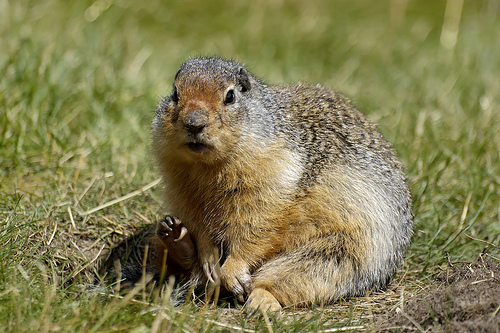
Gopher, Rodent, Mammal, Animal, Grass, Ten Random Facts, animal, Flickr

Gopher
Image courtesy of Sebastian Bergmann/Flickr
  • Gophers have brown, dirt camouflaging fur, long teeth, and a tail that is short.
  • Gophers are prey to weasels, owls, hawks, badgers, snakes and other animals.
  • Gophers are often classified as agriculture and domestic yard pests, as the burrowing under soil can make a visible mess, and they sometimes eat and destroy plants and crops.
  • Gophers are solitary animals and the females give birth to between two to five offspring at one time, that initially can not see.
  • The diet of gophers primarily consists of tubers and roots, as well as vegetables, and other plant material, that they store in their burrows, and they use their cheek pouches to carry their food.
Bibliography:
Gopher, 2014, Wikipedia, http://en.wikipedia.org/wiki/Gopher
Myers P, Geomyidae, 2001, Animal Diversity Web, http://animaldiversity.ummz.umich.edu/accounts/Geomyidae/
Pocket Gophers, 2014, National Wildlife Federation, http://www.nwf.org/wildlife/wildlife-library/mammals/pocket-gophers.aspx

Amazon:     

Related Posts Plugin for WordPress, Blogger...