Shortening

What food product is tasteless and flavourless?  Shortening!

  • Shortening is a type of fat used in cooking and food, primarily to improve the texture of baked goods, by making them less dense and more delicately textured.
  • Shortening is typically made from hydrogenated (partially or fully solidified) vegetable oils such as palm, soybean, or coconut.
  • The term ‘shortening’ was used loosely to refer to lard and margarine, until the 1900s invention of the vegetable based version, although it is still sometimes the case.
  • Shortening quickly became a more viable product than the similar functioning lard, as it was more cost effective and did not need to be refrigerated.
  • ‘Shortening’ is also known by brand names such as ‘Copha’, ‘Cookeen’ and ‘Crisco’, even though they are made from different vegetable oils and may have a different consistency.
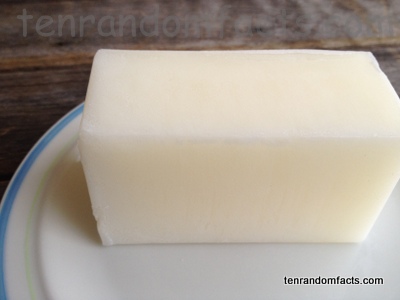
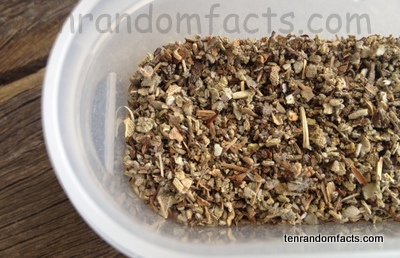
Copha, Shortening, White Block, Australia, Crumble, Culinary, Food, Ten Random Facts

  • Shortening is often used in pastry making to make it flaky, as well as a replacement for margarine or butter, and because it contains less water, it is a safer fat to use for the purpose of frying food.
  • Shortening was first produced as a commercial product in 1911, in the United States by Procter & Gamble, a company that produced soap, candles and lard at the time, and they called it ‘Crisco’, said to be short for ‘crystallized cottonseed oil’, and prior to its launch, the product had been intended for soap making purposes.
  • Shortening originally contained an unhealthy quantity of trans fat, however in some cases, processes have been adjusted to achieve a product that now contains less or none of this type of fat.
  • Shortening typically has a long expiry date, of up to two years unrefrigerated, and once opened, generally up to a year.
  • Shortening is generally tasteless and flavourless, but butter-flavoured varieties are available in some brands.


Bibliography:
Shortening, 2014, Wikipedia, http://en.wikipedia.org/wiki/Shortening
What is Shortening?, 2014, WiseGEEK, http://www.wisegeek.com/what-is-shortening.htm

Amazon:     

Yellowstone National Park

Yellowstone National Park

Yellowstone National Park is a magical place.

  • Yellowstone National Park is a protected reserve, the majority of which is located in Wyoming, a state in the north-western United States of America.
  • Yellowstone National Park was first declared a national park on 1 March, 1872, by then president Ulysses Grant, and is said to be the first designated national park on earth, and it was listed as a UNESCO World Heritage site in 1978.
  • Yellowstone National Park covers an area of 8,983 square kilometres (3,468 square miles), and is filled with water bodies, rock formations and a variety of habitats.
  • Yellowstone National Park has a notably large lake at high altitude that covers America’s biggest super volcano and the largest caldera in the world, while the caldera spans a distance of 45 kilometres by 75 kilometeres (27 miles by 45 miles), and is said to be still active, and has shaped much of the surrounding land.
  • Yellowstone National Park features up to 465 active geysers of the 1280 or so that exist in the park, including the famous ‘Old Faithful Geyser’, and they total approximately 66% of the world’s total number of geysers, and the park also boasts 10,000 geothermal features, of which the world has approximately 20,000.
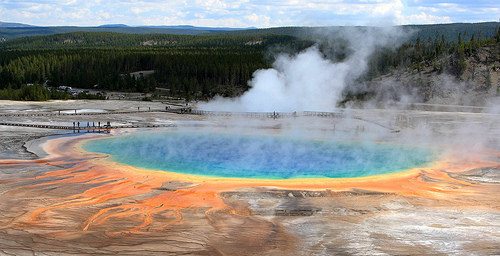
Yellowstone National Park, Grand Prismatic Spring, Hot Spring, Tree, Valley, Amazing, Beautiful, Ten Random Facts, Flickr, North America,
Grand Prismatic Spring in Yellowstone National Park
Image courtesy of Frank Kovalchek/Flickr
  • Yellowstone National Park is hit by minor earthquakes annually by the thousands; one of the greatest being a 7.5 magnitude quake that created a lake due to a dam collapse in 1959.
  • Yellowstone National Park is the home to 1700 native flora species, such as trees, as well as the endemic Yellowstone sand verbena; 311 bird species and approximately 60 mammal species, including wolves, elks, bison, grizzly bears and lynx.
  • Forest fires commonly occur in Yellowstone National Park annually, generally caused by lightning, and the fires are necessary events for the park’s habitat.
  • Yellowstone National Park is visited by approximately two million tourists annually, that are catered for by hotels, lodges and cabins that as a whole, contain more than 2,000 rooms, as well as campgrounds with more than 2,000 campsites.
  • Yellowstone National Park can be accessed and driven through in automobiles, and there are hiking paths totalling 1770 kilometres (1100 miles) in length.
Bibliography:
Yellowstone National Park, 2014, Montana, http://www.visitmt.com/national_parks/yellowstone/
Yellowstone National Park, 2014, Wikipedia, http://en.wikipedia.org/wiki/Yellowstone_National_Park
Yellowstone National Park, 2014, World Heritage Convention UNESCO, http://whc.unesco.org/en/list/28

Amazon:     

Napkin

How would you politely wipe your face without a napkin?

  • Napkins are pieces of material used to politely remove food from one’s face and hands.
  • ‘Napkins’ are also known as ‘face towels’ and ‘serviettes’, and are most commonly manufactured white, as the colour symbolises cleanliness and gives a fresh feel.
  • Napkins are typically made from fabric, that can be washed and reused; or paper, that are usually disposed of after use.
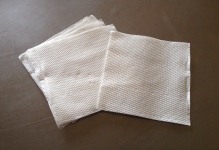
  • Napkins are often square or rectangular in shape; often patterned in design; and are commonly folded for aesthetic purposes.
  • ‘Napkin’ derives from the word ‘nape’, the Old French word for a tablecloth or towel, that originally comes from the Latin word for map, ‘mappa’, and ‘kin’ is the word for ‘little’ in Middle English.

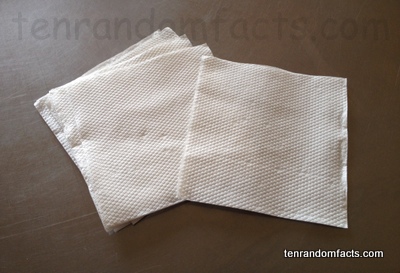
Napkin, White, Paper, Disposable, Pile, Ten Random Facts, Many, Culinary, Invention

  • For table settings, napkins are generally placed to the left of the fork on the table; in the middle of a plate; wrapped around cutlery; grouped together in a specially designed holder; or placed in a ring usually to the left of the fork.
  • Early napkins are believed to have originated as slices of a type of bread, used by those from ancient Greece; ancient Chinese used paper; while ancient Romans are said to have used cloth, that eventually became popular by the 1500s.
  • Napkins normally range in sizes of 13 by 13 centimetres (5 by 5 inches), up to 51 by 56 centimetres (20 by 22 inches).
  • Napkins come in a variety of colours and patterns, can be customised with text and imagery, and are not always strictly a rectangular or square shape.
  • Napkins are often folded into triangles, but also many other shapes, often utilising origami methods to create flowers. cranes and other designs, and paper ones are often purchased already folded in quarters.
Bibliography:
Napkin, 2014, Wikipedia, http://en.wikipedia.org/wiki/Napkin
Napkins, 2014, Napkin Folding Styles, http://www.napkinfoldingstyles.com/napkins/

Amazon:     

Woolly Mammoth

Woolly Mammoth

There is a lot of information about the extinct woolly mammoth.

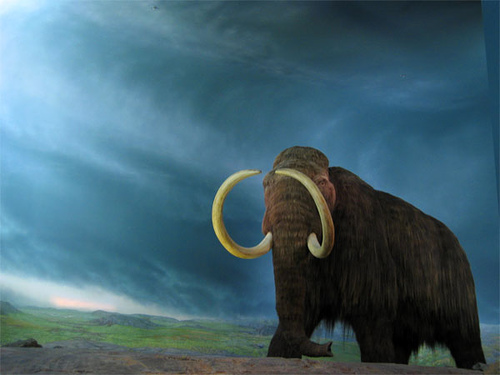
  • Woolly mammoths are large, extinct mammals from prehistoric northern Europe, Asia and America, that are said to be relatives of Asian Elephants.
  • Woolly mammoths have the scientific name of Mammuthus primigenius and are one of ten species of mammoth from the family Elephantidae, the family of elephants and mammoths.
  • Woolly mammoths reached 1.8 to 4 metres (6 to 13 feet) in height and weighed up to 4 to 8 tonnes (4.4 to 8.8 tons); had dark hair coats coloured mostly black or brown; as well as small ears and short tails that reduced the chance of frostbite.
  • Woolly mammoths boast some of the most collected data of all prehistoric animals, due to extensive skeletons, preserved bodies, fossils and cave depictions.
  • Woolly mammoths had two long, sloped tusks that grew to be 1.5 to 4.2 metres (5 to 14 feet) in length, and three quarters were generally visible, while the tusks were probably used for defense and species fighting in the form of hitting.
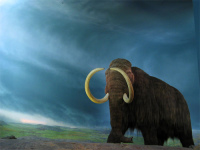
Woolly Mammoth  Royal BC Museum, Victoria, British Columbia, Fake, Replication, Musuem,  Ten Random Facts, Flickr, MammalReplica of a Woolly Mammoth
Image courtesy of Rob Pongsajapan/Flickr
  • Woolly mammoths lived in large herds similar to today’s elephants, while weak and young mammoths were preyed on by pack dog species and large animals from the cat family, and the typical life span ranged from 25 to 80 years.
  • The diet of woolly mammoths probably consisted of vegetation including shrubs, trees, fruit, moss, nuts and smaller plants.
  • Woolly mammoths are often depicted in ancient cave paintings, while the bones were used by people to create human shelters and the tusks made into weapons and tools.
  • Woolly mammoths probably became extinct due to hunting and habitat changes, and the last mammoths probably lived isolated in the Arctic Ocean on Wrangel Island.
  • Some frozen woolly mammoths contain DNA that could possibly be extracted and cloned, although this popular theory is controversial, due to financial costs and ethical issues.
Bibliography:
Woolly Mammoth, 2013, A-Z Animals, http://a-z-animals.com/animals/woolly-mammoth/
Woolly Mammoth, 2014, Wikipedia, http://en.wikipedia.org/wiki/Woolly_mammoth

Amazon:     

Sage

Sage

You will become wise when you eat sage.

  • Sage is a herb that is a perennial plant with the scientific name Salvia officinalis, that originated in the Mediterranean.
  • Sage comes from the family Lamiaceae, the family of mint and deadnettle, and it has a slightly sweet and light peppery taste, that is often used to flavour savoury foods.
  • Sage is commonly used to season meat and stuffing, particularly during Thanksgiving, and is also used in Italian and other European cuisines.
  • Essential oil can be obtained from sage leaves, and the leaves have an abundance of special acids, as well as estrogenic material, niacin and flavones.
  • Sage was commonly used in Ancient Roman and Greek society to treat numerous medical illnesses, and it is still considered to be of medicinal value.

Sage, Green, Herb, Spice, Vegetation, Plant, Culinary, Ten Random Facts, Australia

  • Sage can be used to preserve meat, and this has been known since Ancient times.
  • Fresh sage leaves, which are coloured green to a slight grey, have a more prominent flavour compared to the leaves when then are dry.
  • Sage is commonly available in supermarkets in dried form, and the herb can be bought whole, roughly grounded or powdered, dried or fresh.
  • Sage is believed to increase memory and brain power as shown by numerous experiments.
  • Sage is extremely high in vitamin K, and it also contains calcium, iron, magnesium, manganese, vitamin A, vitamin B6 and fibre.


Bibliography:
Sage, 2014, The World’s Healthiest Foods, http://www.whfoods.com/genpage.php?tname=foodspice&dbid=76
Salvia officinalis, 2014, Wikipedia, http://en.wikipedia.org/wiki/Salvia_officinalis

Amazon:     

Venice

Venice

Venice is a city of history and water.

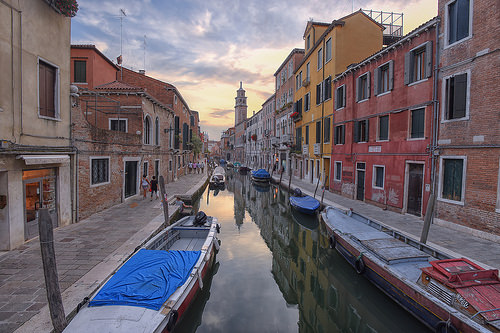
  • Venice is a city located in Europe, in the northeastern area of Italy, that is made of a lagoon, 118 islands, 177 canals and 409 bridges.
  • ‘Venice’ is also known as ‘La Dominante’, ‘City of Masks’, ‘Serenissima’, ‘City of Water’, ‘The Floating City’, ‘Queen of the Adriatic’, ‘City of Canals’ and ‘City of Bridges’.
  • Venice is considered as one of the most beautiful cities in the world, and it became a UNESCO World Heritage Site in 1987 due to the lagoon, canals and historical constructions.
  • Venice was the home to approximately 270,700 people in 2009, and the population count has been historically erratic due to the destructive Black Plague between the 14th to 17th centuries.
  • Venice was probably founded by numerous escapees of surrounding country invasions, and the first ruler, the doge, Paolo Lucio Anafesto, in 697 is believed to have been Exarch Paul.
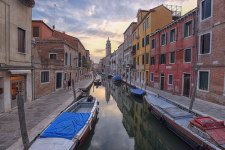
Venice Canal in Dorsoduro, Europe, City, Water, Boats, Scenic, Ten Random Facts, Flickr, Place,
Part of Venice
Image courtesy of Diana Robinson/Flickr
  • From the 800s, Venice was a popular trade site, particularly once coastline pirates were defeated; and later it became well known for its famous aritsts, and it now has the most masterpieces per kilometre in the world.
  • Occasionally, Venice is flooded by high tides of the Adriatic Sea, known as ‘acqua alta’, and these especially high tides can increase water depths by up to 1.94 metres (6.36 feet), as recorded in 1966, although generally they are less than a 1.5 metre (4.9 feet) increase.
  • Historical Venice style buildings made from stone or brick, were generally built on timber poles that are embedded in clay, mud and sand, and they mostly remain in good condition, even though they have been submerged in water for hundreds of years.
  • Venice is a very popular tourist destination, with visitors attracted to the city’s incredible architecture and uniqueness, as well as the famous annual Carnival of Venice held early in the year, although the number of visitors, approximately 60,000 every day, has caused some controversy due to the sheer quantity and potential damage they can generate on various levels.
  • Typical transport in Venice includes gondolas and other boats that use the canals; automobiles and trains; and aircraft facilities are also available.
Bibliography:
Venice, 2014, Lonely Planet, http://www.lonelyplanet.com/italy/venice
Venice, 2014, Wikipedia, http://en.wikipedia.org/wiki/Venice
Venice and its Lagoon, 2014, UNESCO WHC, http://whc.unesco.org/en/list/394

Amazon:      

Related Posts Plugin for WordPress, Blogger...