Chocolate Brownie

Chocolate Brownie

Do you like your chocolate brownies fudgy or cakey?

  • Chocolate brownies are a cooked, sweet food that resembles something between a cookie and a cake, and are presented in the shape of a bar or a square.
  • Chocolate brownies often have the texture of cake or fudge, and can have additional nuts, frosting or icing, cream, chocolate chips or the like.
  • Chocolate brownies are generally made with flour, butter, eggs, cocoa powder or chocolate, and sugar.
  • A chocolate brownie is often served by itself as a snack or dessert, with ice-cream, cream or icing sugar, often as snacks with tea, milk or coffee.
  • It is believed that cake like chocolate brownies were first made by one of Chicago’s (USA) chefs from the The Palmer House Hotel, in the 1890s, for American Bertha Palmer, as a lunch box snack for ladies, originally containing walnuts and using apricot glaze.
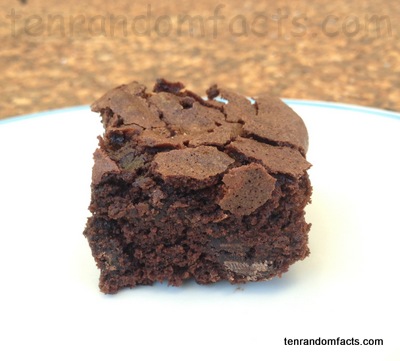
Chocolate brownie, brown, packet mix, cooked, Slice, Single, Ten Random Facts,

  • It is rumoured that chocolate brownies were made due to a mistake of either placing chocolate in a cookie batch, no flour in batter, or no baking powder in batter.
  • Chocolate brownie recipes were first published in 1904, in two different American published cookbooks, with slight variations in the recipes, one of which was called ‘Bangor Brownies’.
  • If the chocolate brownie ingredients are altered slightly by removing or substituting the chocolate with another ingredient, it is known as a ‘blondie’.
  • Although the origin of the name is uncertain, ‘chocolate brownies’ may have come from the characters of the 1887 book ‘The Brownies: Their Book’ by Palmer Cox.
  • Chocolate brownies quickly became popular, and have remained a common treat, and their popularity has spread to a number of other nations in the world.
Bibliography:
Chocolate Brownie, 2014, Wikipedia, http://en.wikipedia.org/wiki/Chocolate_brownie
Martin C, Brownies: The History of a Classic American Dessert, 2012, History Scene, http://www.ushistoryscene.com/uncategorized/brownies/

Amazon:      

Seljalandsfoss

Seljalandsfoss

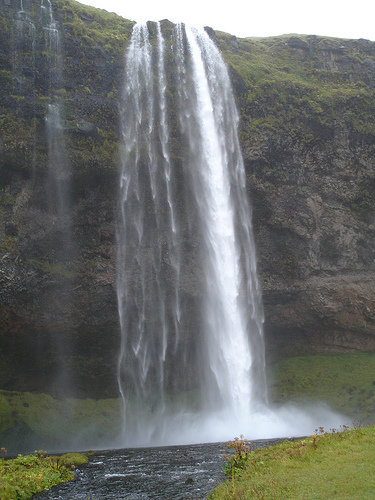
The breathtaking Seljalandsfoss waterfall:

  • Seljalandsfoss, also known as ‘Seljalands waterfall’, is a splendid waterfall that can be found in Southern Iceland.
  • Seljalandsfoss is very popular in Icelandic photography, being one of Iceland’s most famous falls.
  • Seljalandsfoss was part of the American reality television race, ‘The Amazing Race (6)’ in 2004, as a waypoint in the first leg.
  • ‘Seljalandsfoss’, the Icelandic name of the waterfall, literally means ‘selling the land of waterfalls’ in English.
  • Seljalandsfoss, from the top to the bottom, measures about 60 metres (197 feet) in height.

Saljalandsfoss, Water, Waterfall, iceland, Picturesque, Ten Random Facts, Flickr,

Seljalandsfoss
Image courtesy of Borkur Sigurbjornsson/Flickr
  • Seljalandsfoss is formed by the Seljalandsá River, which runs over the edge of a volcanic cliff.
  • Seljalandsfoss can be viewed from all angles, as a walking trail passes behind the falls, and tours to the falls are also available.
  • Seljalandsfoss features a small cascade at the top of the falls, with smaller waterfalls surrounding it.
  • The cliff of the Seljalandsfoss is believed to have been once part of the coastline of Iceland.
  • Seljalandsfoss partially freezes in winter, and the surroundings are covered in snow and ice.
Bibliography:
Seljalandsfoss, 2013, Wikipedia, http://en.wikipedia.org/wiki/Seljalandsfoss
Seljalandsfoss Waterfall, 2013, Cancuk Abroad, http://www.canuckabroad.com/places/place/seljalandsfoss-waterfall/

Amazon:     

Acrylic Paint

Acrylic Paint

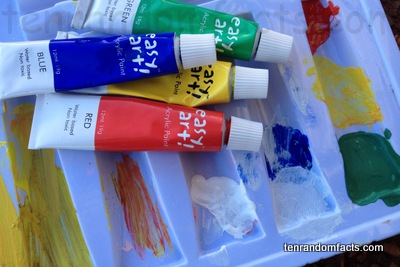
Express art beautifully using acrylic paint.

  • Acrylic paint is a paint that is made from the combination of pigment and acrylic polymer emulsion, which contains acrylic resin and water.
  • The resin used in acrylic paints was first patented in 1915 by a chemist and inventor Otto Röhm from Germany.
  • Acrylic paints began to be developed in the 1920s to the 1940s and were able to be bought commercially in the 1950s.
  • Acrylic paints is a practical paint when cleaning, as it is water soluble, making it generally easily removed with water, but once it is dried on canvas, it can prove difficult to remove.
  • Acrylic paints have characteristics that can be easily modified with mediums or water, which can affect the way it looks when dried, as well as its texture, and hardness.

Acrylic Paint, Dry, Liquid, Yellow, Blue, Green, Red, White, Tray, Tube, Easy art. Ten Random Facts

  • There are two main grades of acrylic paint, and they generally reflect the quality and how much pigment exists in the paint, with ‘artist’ or ‘professional’ grade paint being the best quality and including more pigment, with a ‘student’ or ‘studio’ grade being a cheaper paint with less pigment.
  • Acrylic paints can often resemble oil paints or water paints, or have the unique texture of acrylics.
  • Acrylic paints are often used in schools as they can be produced with non-toxic ingredients, and they are also used professionally by artists, as well as being the base or the main ingredient of water-based house paints.
  • Acrylic paints were popular during the pop art, abstract art and photorealism periods in the 1900s, and have remained very popular due to their flexible nature, providing less cracking; versatility; and their quick drying characteristics.
  • Acrylic paint is often used in techniques such as repetitive paint coats and is often glossed with a gloss medium for finishing and sealing the work.
Bibliography:
Acrylic Paint, 2013, Wikipedia, http://en.wikipedia.org/wiki/Acrylic_paint
History of Acrylic Painting, 2014, ARTmine, http://www.art-mine.com/for-sale/paintings-submedium-acrylic/history-of-acrylic-painting

Amazon:      

Warthog

Warthog

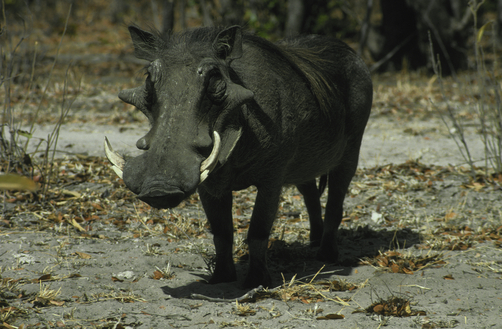
Warthogs do not have a wart virus.

  • ‘Warthogs’ are sometimes called ‘common warthogs,’ and are known as the ‘pig of the plains’ or ‘vlakvark’ as the Afrikaans call them.
  • Warthogs are scientifically known as ‘Phacochoerus africanus’, and are from the family Suidae, the family of pigs.
  • Warthogs are native to sub-Saharan Africa, and are usually found in their natural habitat of grassy plains and wooded areas.
  • Warthogs grow to be 0.9 to 1.5 metres (3.0 to 4.9 feet) in height and weigh 45 to 150 kilograms (99 to 330 pounds) depending on the gender.
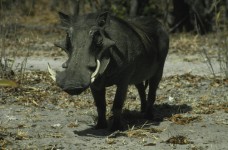
  • Warthogs have four ivory tusks that curve from the mouth at a 90° angle that they use for digging, fighting or for defence against predators such as humans who hunt them for their meat and tusks, hyenas, leopards, lions and crocodiles.

Warthog, Four, Tusk, Pig, Hog, Ugly, Mane, Zimbabwe, Ten Random Facts

Warthog
Image courtesy of National Geographic
  • Warthogs have four ‘warts’ or bumps on their face, that are said to be used as fat reserves and for protection.
  • Warthogs typically have a thin fur coat in black and brown colours, and birds often sit on their backs to eat the small insects that can be found on the mammal.
  • Warthogs have a diet that mainly consists of grass and other vegetation, various fruit and berries, and insects, although sometimes they are meat eaters.
  • Warthogs are more likely to run away than fight, and can run up to 48 kilometres per hour (30 miles per hour).
  • Warthogs generally breed during seasons of wet and rain, giving birth to piglet litters from two to four, although a greater number are sometimes born.
Bibliography:
Warthog, 2014, National Geographic, http://animals.nationalgeographic.com.au/animals/mammals/warthog/
Warthog, 2014, Wikipedia, http://en.wikipedia.org/wiki/Warthog

Amazon:     

Red Orchid Bush

Red Orchid Bush

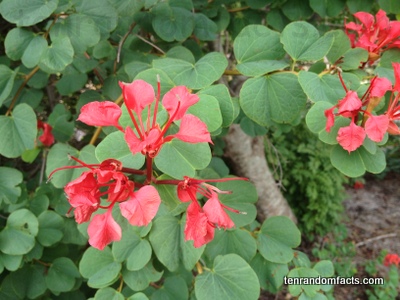
Red orchid bushes have red flowers and are bushes, but they are not orchids.

  • ‘Red orchid bushes’ are also known as ‘red bauhinias’, ‘Pride of De Kaaps’, ‘orchid trees’, ‘nasturtium bauhinias’, ‘African orchid trees’ and ‘African plumes’.
  • Red orchid bushes are from the family Fabaceae, which is the family of legumes, beans and peas, and their scientific name is ‘Bauhinia galpinii’.
  • Red orchid bushes are clambering, evergreen perennial shrubs that are native to south and east Africa.
  • Red orchid bushes have flowers 5 to 10 cm (2 to 4 inches) in diameter, with five petals and three large stamens, and are usually red, although pink and orange varieties are also available.
  • Red orchid bushes generally grow to be a height of 3 to 5 metres (10 to 16.4 feet), but may climb higher with the support of other trees.

Red Orchid Bush, Pride of De Kaap, Baulinia galpnii, Ten Random Facts, Green, Red, Plant, Bush,

  • Red orchid bushes generally bloom during spring, summer and early autumn, and follow with long green seed pods that turn brown and split open, releasing the seeds.
  • Red orchid bushes are often used as an ornamental in gardens, and they prefer sunny or partly shady conditions.
  • Red orchid bushes are a weed in some countries, including parts of Australia, as the seeds and cuttings are easily grown and spread by garden waste, water and garden trimmings, and the plants can be found on abandoned urban land, forest and woodlands.
  • Red orchid bushes attract butterflies and bees, and the branches have been used for basket weaving and roof trusses.
  • The green leaves of the red orchid bush are shaped a bit like a hoof, and are symmetrical with two lobes.
Bibliography:
Bauhinia galpinii, 2013, Wikipedia, http://en.wikipedia.org/wiki/Bauhinia_galpinii
Red bauhinia, n.d, Brisbane City Council, http://weeds.brisbane.qld.gov.au/weeds/red-bauhinia-bauhinia-galpinii

Amazon:    

Nikola Tesla

Nikola Tesla

Nikola Tesla was an inventor of many ideas and less inventions.

  • Nikola Tesla was a Serbian American who was a renowned inventor for his AC (alternating current) electrical system, and he was also an engineer, physicist, futurist and author.
  • Nikola Tesla was born on 10 July, 1856 in Smiljan in the Austrian Empire, now Croatia, in Europe, and died quietly on 7 January 1943 in America’s New York, but was not discovered dead until the next day, by a maid.
  • Nikola Tesla was to be a priest, like his father, but when Tesla caught life-threatening cholera; his father promised he could go to an engineering university.
  • Nikola Tesla spent much of his life in the United States, and became a citizen of the country in 1891 at age 35, originally working for future rival Thomas Edison in the 1880s, but later working for himself.
  • Nikola Tesla had at least 278 official patents for some of his inventions, with many being improvements to technology, in areas of radio, magnetism and, particularly electricity, and he also experimented significantly with x-rays.

Nikola Tesla, Greyscale, Painting, Ten Random Facts, Inventor, Flickr

Tesla
Image courtesy of Theirry Ehrmann/Flickr

  • The SI unit (System of Units) of measurement for the strength of a magnetic field was named after Nikola Tesla, and is known as a ‘tesla’.
  • Although Nikola Tesla earned much money from his patents, Tesla experienced bankruptcy and died in debt, since much of his money was spent on new experiments.
  • Nikola Tesla was primarily 1.88 metres (6 feet 2 inch) in height, 64 kilograms (142 pounds) in weight, had a liking for pigeons, did not generally sleep longer than two hours a night, is believed to have had obsessive-compulsive disorder and a photographic memory, and died unmarried.
  • Nikola Tesla has a planet, ‘2244 Tesla’, and a crater named after him, and he also a number of other honours and memorials, including a monument that was unveiled in September 2013 in New York.
  • Nikola Tesla Memorial Centre opened in 2006, in his hometown in Croatia, featuring Tesla’s inventions, innovations, statues and even his ashes.
Bibliography:Nikola Tesla, 2014, Wikipedia, http://en.wikipedia.org/wiki/Nikola_Tesla
Vujovic L, Tesla’s Biography, 1998, Tesla Memorial Society of New York, http://www.teslasociety.com/biography.htm

Amazon:     

Related Posts Plugin for WordPress, Blogger...